
High Value Courier Service: When a Parcel Network Is the Wrong Answer
How a high value courier service works: hand-carry, chain of custody, two-person rules and insurance. When a chauffeur beats a parcel network for valuables.

A high value courier service solves a problem that ordinary logistics is not built for: moving something whose worth, confidentiality or irreplaceability makes a sorting hub an unacceptable place for it to spend the night.
Parcel networks are extraordinary machines. They are also machines built around volume, automation and anonymous handling. That is exactly right for ten thousand packages and exactly wrong for one watch, one prototype, one signed deed, or one painting.
SilverDrive runs this work out of Amsterdam and across Europe as a chauffeur service rather than a logistics service, which is a meaningful distinction: the item travels in the passenger compartment of a car, with a named driver, and it is never handed to anyone who is not expecting it.
What Actually Makes It “High Value”
The obvious answer is the price tag. The more useful answer is that the item is one of these:
- Irreplaceable. An artwork, an original document, a prototype that took nine months to build. Insurance pays out; it does not undo the loss.
- Confidential. The contents of a due-diligence file, a pre-launch sample, a legal instrument. Here the risk is disclosure, not theft.
- Time-critical. A part that stops a production line, a document that must be signed before a deadline, a piece required for an exhibition opening.
- Simply very expensive, and therefore attractive to people who are paying attention.
Different risks, same conclusion: the item should not enter a network where nobody can tell you the name of the person currently holding it.
Chain Of Custody, In Practice
The phrase gets used loosely. In practice it means a documented, unbroken record of exactly who has possession at every point.
Collection. The item is handed over by a named person to a named driver, against identification, with a signed record of what was collected, when, and in what condition. Where appropriate, the item is sealed in the presence of the sender and the seal number recorded.
Transit. The item stays with the driver. Not in an unattended vehicle, not in a hotel room, not left with a receptionist. On multi-day work this is the constraint that shapes the whole plan, and it is where cheap arrangements quietly fail.
Handover. Delivery to a named recipient only, verified, against signature, with condition confirmed and the seal checked before the record is closed.
The record. Timestamped, retained, and available afterwards. If something is disputed weeks later, this is the only thing that settles it.
Our guide to high value goods transport sets out the full chain-of-custody framework, including what to specify in a brief.
The Two-Person Rule, And When It Is Worth It
For higher-risk consignments, a second person changes the risk profile considerably. One stays with the item at all times, including at fuel stops, comfort breaks and while the vehicle is being moved. The item is never alone with a vehicle.
It is not always necessary. For a short city transfer between two secure buildings, one driver is proportionate. For a long cross-border run with an item that would make the news, it is not.
The related decision is whether a second vehicle runs in support. This is standard for some art and jewellery movements and excessive for most other things. The right answer comes from the actual threat, not from the invoice value, and an honest operator will talk you out of it when it is theatre.
Insurance: The Conversation To Have Before, Not After
This is where most high-value transport arrangements are weakest, and the failure is almost always the same: everyone assumes somebody else’s policy covers it.
Standard motor insurance covers the vehicle. Standard carrier liability is typically capped at levels that are irrelevant next to a serious consignment, and frequently excludes precisely the categories that matter: cash, jewellery, precious metals, fine art.
The workable approach is to establish, in writing and before the job:
- Declared value of the consignment.
- Which policy responds: the client’s own specie or fine-art cover, the sender’s, or cover arranged for the movement.
- What the conditions are. Many valuables policies impose requirements about attendance, vehicle security and overnight storage. Breaching them voids cover far more reliably than any thief.
- What is explicitly excluded.
We will tell you when your cover does not extend to what you are asking us to do. It is a short conversation and a much shorter one than the alternative.
What Moves This Way
Watches and jewellery. Between boutiques, to and from auction, to a client for a private viewing, or to a workshop for service. Amsterdam’s boutique district and the trade in Antwerp make this a regular route; the related passenger version is a chauffeured boutique day where the buyer travels with the purchase.
Art and antiques. Between galleries, fairs, restorers and private collections. Fairs concentrate the demand: TEFAF in Maastricht and PAN in Amsterdam both generate a great deal of short-notice movement.
Prototypes and samples. Pre-release hardware, product samples, materials for a pitch. Usually confidentiality-driven rather than value-driven, and often with an NDA attached to the driver rather than only to the company.
Legal and corporate documents. Originals for a closing, board papers, instruments that exist in one copy.
Medical and laboratory material, where the constraints are time and temperature as much as security.
Amsterdam And Cross-Border
Amsterdam sits well for this work. Schiphol is a major air-freight and passenger hub, Antwerp’s diamond district is around two hours away, Brussels and Düsseldorf are comparable, and the German and French networks open up from there.
Cross-border movements inside the Schengen area avoid routine border stops, but customs and declaration obligations still apply to goods in some circumstances, carnets for temporary exhibition items, for instance. That is the sender’s responsibility to establish, and a competent operator will ask about it rather than assume it has been handled.
For long runs, the long-distance service format applies: one driver, one vehicle, one price agreed in advance covering tolls and driving time.
Why A Chauffeur Rather Than A Security Firm
For genuinely high-threat movements, bullion, large cash volumes, you want a cash-in-transit specialist with armoured vehicles and an entirely different licensing regime. We do not pretend otherwise.
The middle ground is where the chauffeur model fits best: items of real value where the correct posture is discretion rather than visible security. An armoured van with a logo announces that something worth stealing is inside. An ordinary executive saloon does not.
That is the same logic that governs VIP passenger work, and it is why the two services are run by the same kind of driver.
What We Provide
- A named, screened driver, briefed before collection.
- Written confidentiality covering the consignment and the parties.
- Documented collection and delivery, with signatures and condition notes.
- The item in the passenger compartment, attended at all times.
- A fixed price agreed at booking, including waiting time where the schedule needs it.
- A second person or second vehicle where the job justifies it, and a straight answer when it does not.
Frequently Asked Questions
What counts as a high value courier service?
A service where a named person takes possession of an item, stays with it for the whole journey, and hands it to a named recipient against signature, rather than a parcel entering a sorting network. The value threshold varies; the defining feature is that the item is never out of a responsible person’s control.
How is this different from a normal courier?
A standard courier moves parcels through depots, vans and hubs, with several handovers and a tracking number that tells you where the item was rather than who has it. A high value courier is a single custody chain with no sorting facility, no overnight depot and no anonymous handlers.
What items typically move this way?
Watches and jewellery, precious metals, art and antiques, prototypes and pre-release samples, legal and corporate documents, medical and laboratory material, and anything whose loss would matter more for confidentiality than for replacement cost.
Is the goods value insured during transport?
Cover depends on the item, the declared value and the arrangements agreed in advance. Standard motor and carrier policies are not designed for high-value goods, so the honest answer is that insurance must be arranged deliberately for the consignment rather than assumed. We tell clients what is and is not covered before the job, in writing.
Can the same vehicle carry a passenger and the item?
Often, yes, and it is a common arrangement: the owner, dealer or specialist travels with the item and the chauffeur handles the driving, access and waiting. It keeps the custody chain to one person while removing the parking and route problems.
The Short Version
A high value courier service is one custody chain, one named driver and one signature at each end, with the item never left alone and the insurance settled in writing beforehand. Parcel networks are cheaper and, for the right things, better. For the things where a depot overnight is unacceptable, they are not an option at all. Tell us what needs to move and we will tell you what it needs.
More from the Journal
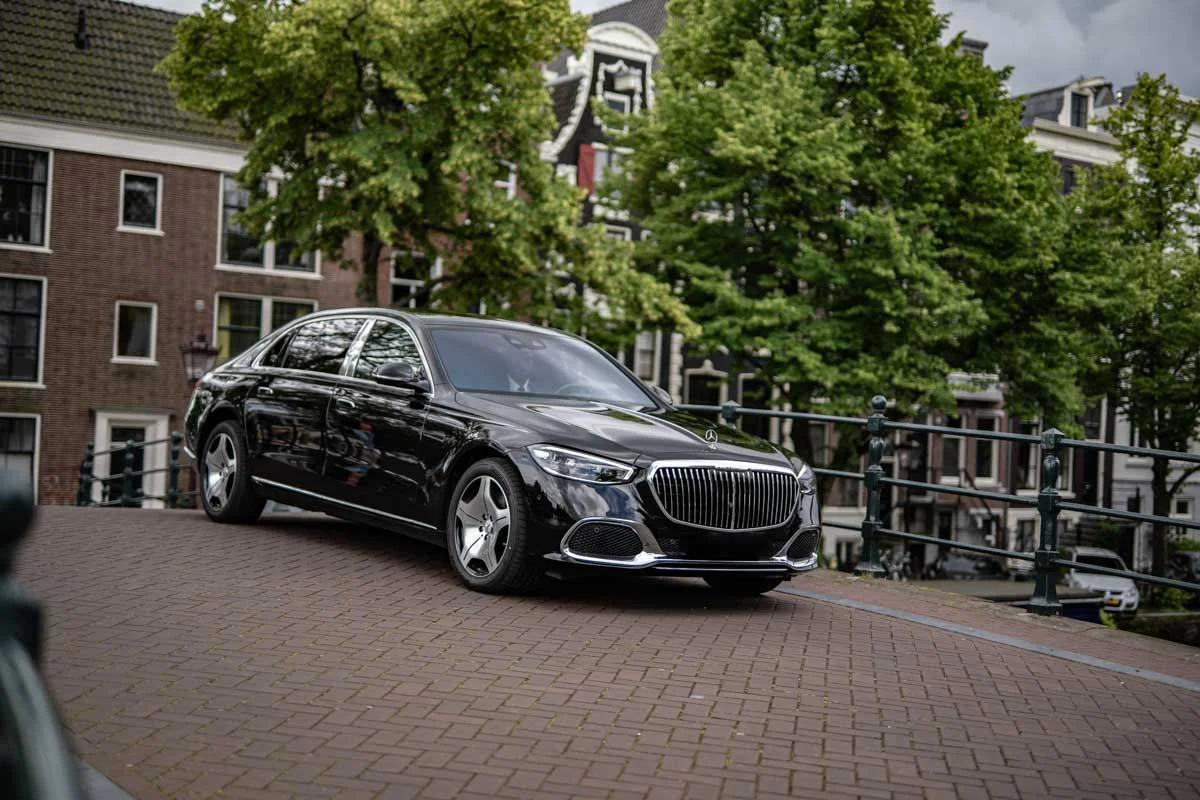
Chauffeur Service in Haarlem: The Quiet Side of Amsterdam
Chauffeur service in Haarlem: Schiphol transfers, the North Sea beaches at Zandvoort, bulb-field season and a medieval centre cars cannot enter.
How to Become a Chauffeur: Licences, Skills and Getting Hired
How to become a chauffeur or private driver: the Dutch taxi driver card explained, licensing across Europe, what operators actually screen for, and the real job.

Wedding Transportation: Moving the Guests, Not Just the Couple
A practical wedding transportation guide: shuttle loops, vehicle mix, timings that hold, late-night returns and the contingencies that save the evening.