
How to Become a Chauffeur: Licences, Skills and Getting Hired
How to become a chauffeur or private driver: the Dutch taxi driver card explained, licensing across Europe, what operators actually screen for, and the real job.

Becoming a chauffeur is one of those careers where the formal requirements are the easy part and the real requirements are rarely written down anywhere.
The licence takes a few months. Learning to be the person a chief executive is comfortable having in the car during a difficult phone call takes considerably longer, and it is what actually determines whether you get hired at the level you want.
This guide covers both: the paperwork, market by market, and what operators are really assessing.
What The Job Actually Is
Before the licensing, it is worth being honest about the work, because a lot of people enter it with the wrong picture.
Most of it is waiting. You will spend more hours parked outside buildings than driving. Waiting well, alert, presentable, not asleep, not visibly bored, ready to move in thirty seconds, is a genuine professional skill and the one most new drivers underestimate.
The driving is deliberately unexciting. Smooth is the entire objective. No sharp braking, no late lane changes, nothing that makes a passenger look up from a laptop. If your interest in the job is enjoying the cars, this will disappoint you: you are not driving the car for you.
The hours are irregular. Flights land at 06:00 and dinners finish at 01:00. Airport work in particular means early starts and late finishes, and a schedule that does not resemble anyone else’s.
Discretion is not optional. You will hear confidential calls, see private situations and know where people were. Repeating any of it ends the career, not just the job.
Presentation is part of the role. Suit, clean car, no phone in your hand, opening the door without hovering. It is a front-of-house job that happens to involve a steering wheel.
If that reads as appealing rather than restrictive, you have the temperament for it.
The Dutch Route: Chauffeurskaart Taxi
In the Netherlands, most professional passenger transport requires a chauffeurskaart taxi, the taxi driver card, issued by Kiwa Register. The route to it runs like this.
1. Hold a category B driving licence. With a real driving history behind it. A licence held for six months is not what operators mean by experience.
2. Pass the CBR taxi driver exams. Two of them: the theory exam (taxi vakbekwaamheid theorie) and the practical exam (taxi vakbekwaamheid praktijk). The theory must be passed first, and both must be completed within a year of each other, which produces the chauffeursdiploma taxi.
3. Get a VOG. The Verklaring Omtrent het Gedrag, a certificate of conduct, issued for the taxi profession specifically. This is a background check against the profession you are entering, not a generic one.
4. Get a medical declaration. A doctor’s assessment of fitness to drive professionally, including vision and hearing.
5. Apply to Kiwa. Both the VOG and the medical declaration must be no more than four months old at the point of application, which is the single most common reason applications get bounced: people do them in the wrong order and one expires.
The card is valid for five years and then renewed.
There is also a limited card (beperkte chauffeurskaart), which permits only fixed passengers on fixed routes at fixed times and no financial transactions. It is a lighter route into contract and shuttle work, not into general chauffeur work.
Some categories of executive transport sit differently within the regulations than classic taxi work, and requirements vary between operators. If you are applying to a specific company, ask them directly what they require: it is a reasonable question and the answer tells you something about how they operate.
Licensing Elsewhere In Europe
If you are looking beyond the Netherlands, the pattern is similar everywhere and the details are not transferable.
Germany. A Personenbeförderungsschein (P-Schein), a passenger transport permit on top of the ordinary licence, requiring a medical examination, an eyesight test and a clean record extract. Chauffeur companies operate as Mietwagen mit Fahrer, which is a separate licence class from taxis, as we cover in our guide to chauffeur service in Germany.
United Kingdom. A private hire vehicle driver licence from the local licensing authority, Transport for London in the capital, involving a criminal record check, a medical, and English language and knowledge requirements.
France. A carte professionnelle VTC, requiring an examination and a medical, and distinct from taxi licensing.
Belgium. Regionally regulated, with different rules in Brussels, Flanders and Wallonia.
None of these recognise each other automatically. Driving across borders on a job is generally fine; being based in another country to work there is a different question, and one to settle before you move.
What Operators Actually Screen For
The licence gets your application read. These decide whether you get hired.
A genuinely clean driving record. Not “no recent points”. Operators check properly, and insurance underwriters check harder.
A verifiable background. Gaps in employment history get asked about. Answer them straightforwardly.
Presentation at interview. If you turn up to an interview for a chauffeur position in the wrong clothes, the interview is already over. This is not snobbery; it is a direct test of whether you understand the role.
Language. English is effectively mandatory for international chauffeur work in the Netherlands, because a large share of passengers do not speak Dutch. Additional languages are a real advantage.
Local knowledge. Not memorising every street, but knowing how a city behaves: where it congests, which approach to a hotel works at 17:00, where you can legally wait.
Discretion, demonstrated. In an interview this shows up in what you do not say. Candidates who tell colourful stories about previous clients are declining the job in real time.
Temperament. Can you be told to wait for three hours and be pleasant about it? Can you handle a passenger having a bad day without taking it personally? Can you say nothing for an hour?
Routes In
Directly from another service profession. Hospitality, aviation cabin crew, close protection and the military all produce people who do well in this work, for the same reason: they were trained in composure, presentation and following a plan.
From taxi or private hire. A common route, with one adjustment to make. Volume driving optimises for turnaround; chauffeur work optimises for one client’s experience. The habits that made you efficient in a taxi are not all the right habits here.
As a chauffeur partner with your own vehicle. Some operators work with owner-drivers who bring their own car and are contracted for work. It is a genuine route, with the obvious trade-off: you take on the vehicle cost, financing, depreciation and downtime. Do the arithmetic properly before committing, including what happens in a quiet month.
Straight into executive transport. Possible with the right background, but expect a serious screening process. Our guide to becoming an executive chauffeur covers the specifics of that end of the market.
Pay, Honestly
It varies too much by market, employer and hours for a single figure to mean anything, and anybody quoting you one without qualification is guessing.
What can be said usefully:
- Employed chauffeur roles with an established operator pay a salary with overtime and irregular-hours arrangements, plus tips in some markets.
- Owner-driver arrangements gross more and net variably, because the vehicle is yours.
- Private household positions, driving for one family, pay differently again and often include other duties.
- The premium is for reliability, not for driving skill. Anyone can drive. Being consistently on time, presentable and discreet for years is what commands the rate.
How To Apply To A Chauffeur Company
Some practical advice on the application itself.
Apply to operators, not to platforms. Companies that own their vehicles and employ their drivers offer careers. Marketplaces offer jobs.
Lead with reliability. Years of clean driving, a stable record, evidence you turn up. Not enthusiasm for cars.
Mention languages and any protection, hospitality or aviation background early.
Be specific about availability. Early mornings and late nights are the work. Saying you are available for both, and meaning it, moves you up the list.
Do not oversell. The trait being assessed is whether you will still be reliable in year three.
SilverDrive hires chauffeurs in Amsterdam and across our European network. If you have the licence, the record and the temperament, get in touch.
Frequently Asked Questions
What licence do you need to be a chauffeur in the Netherlands?
For taxi and most private-hire passenger work you need a chauffeurskaart taxi, issued by Kiwa Register. Getting one means passing the CBR taxi driver exams, theory and practical, both within a year, and supplying a VOG certificate of conduct and a medical declaration, neither older than four months. The card is valid for five years. Requirements differ for some categories of executive transport, so ask the operator you are applying to.
How long does it take to become a chauffeur?
The paperwork side is a matter of weeks to a few months, depending on how quickly you pass the exams and how long the VOG takes. Becoming good at the job takes considerably longer, and that is the part employers are actually assessing.
Do you need experience to get hired as a private driver?
Not necessarily in chauffeur work, but you need a clean licence, a real driving history and evidence that you can be trusted with confidential situations. Backgrounds in hospitality, protection, aviation cabin crew and the military all transfer well, because they train the same instincts.
Is being a chauffeur a good job?
It suits a specific temperament. If you are comfortable with long stretches of waiting, take genuine satisfaction in things going smoothly and unnoticed, and can be discreet without effort, it is a good career with real progression. If you want variety, conversation and control over your day, it is not.
What is the difference between a taxi driver and a chauffeur?
A taxi driver is dispatched to whoever books next and is paid by the journey. A chauffeur is assigned to a client, often the same client repeatedly, and is judged on discretion, presentation and anticipation as much as on driving. The licensing overlaps; the job does not.
The Short Version
In the Netherlands the formal route is exams at the CBR, a VOG and a medical, then a chauffeurskaart from Kiwa, and watch the four-month expiry on the documents. The informal route is longer: composure, presentation, discretion and the ability to wait for hours without becoming a problem. The licence gets your application read. The temperament gets you the career.
More from the Journal
Chauffeur Service in Haarlem: The Quiet Side of Amsterdam
Chauffeur service in Haarlem: Schiphol transfers, the North Sea beaches at Zandvoort, bulb-field season and a medieval centre cars cannot enter.

Wedding Transportation: Moving the Guests, Not Just the Couple
A practical wedding transportation guide: shuttle loops, vehicle mix, timings that hold, late-night returns and the contingencies that save the evening.
Electric Chauffeur Cars: What Changes in the Back Seat, and What Does Not
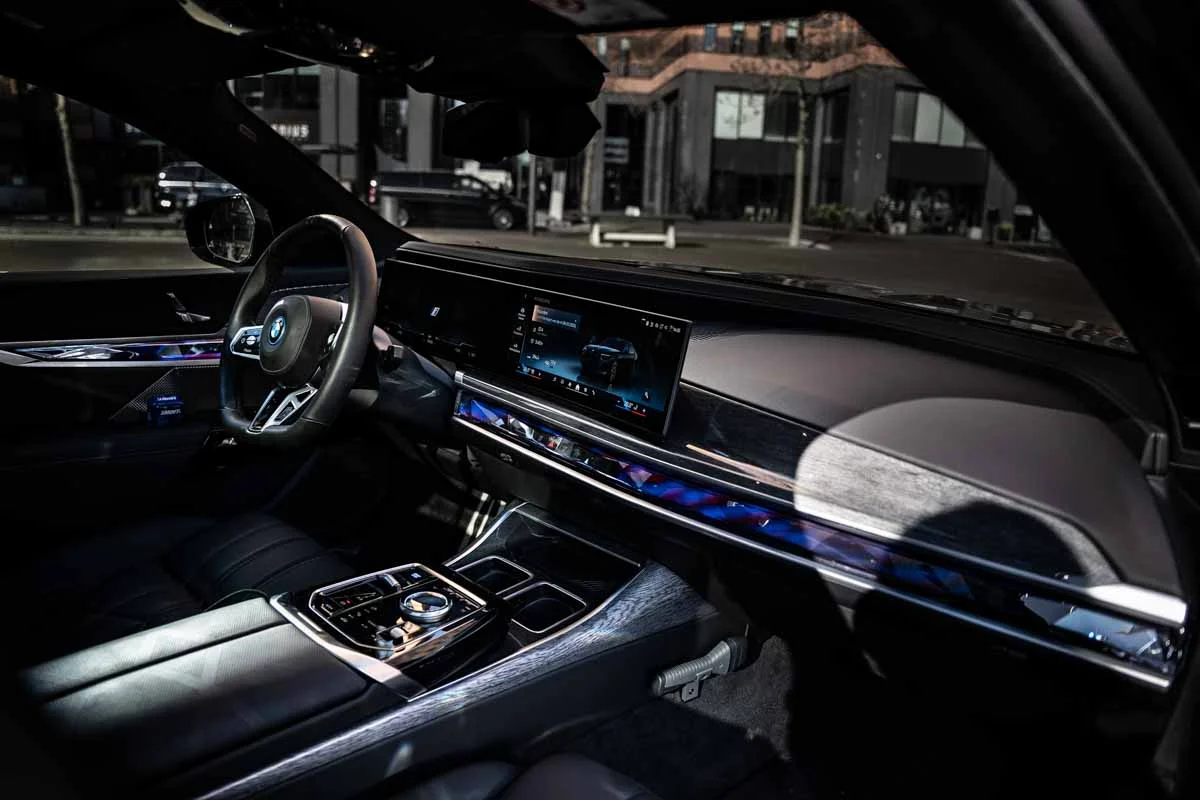
BMW i7, Mercedes EQS and EQV in chauffeur service: real-world range, charging on long transfers, low-emission zones and what to ask before booking an EV.