
Chauffeur Service in Germany: How the Rules and the Roads Work
A practical guide to chauffeur service in Germany: Mietwagen versus Taxi, environmental zones, the trade-fair calendar and driving between cities.
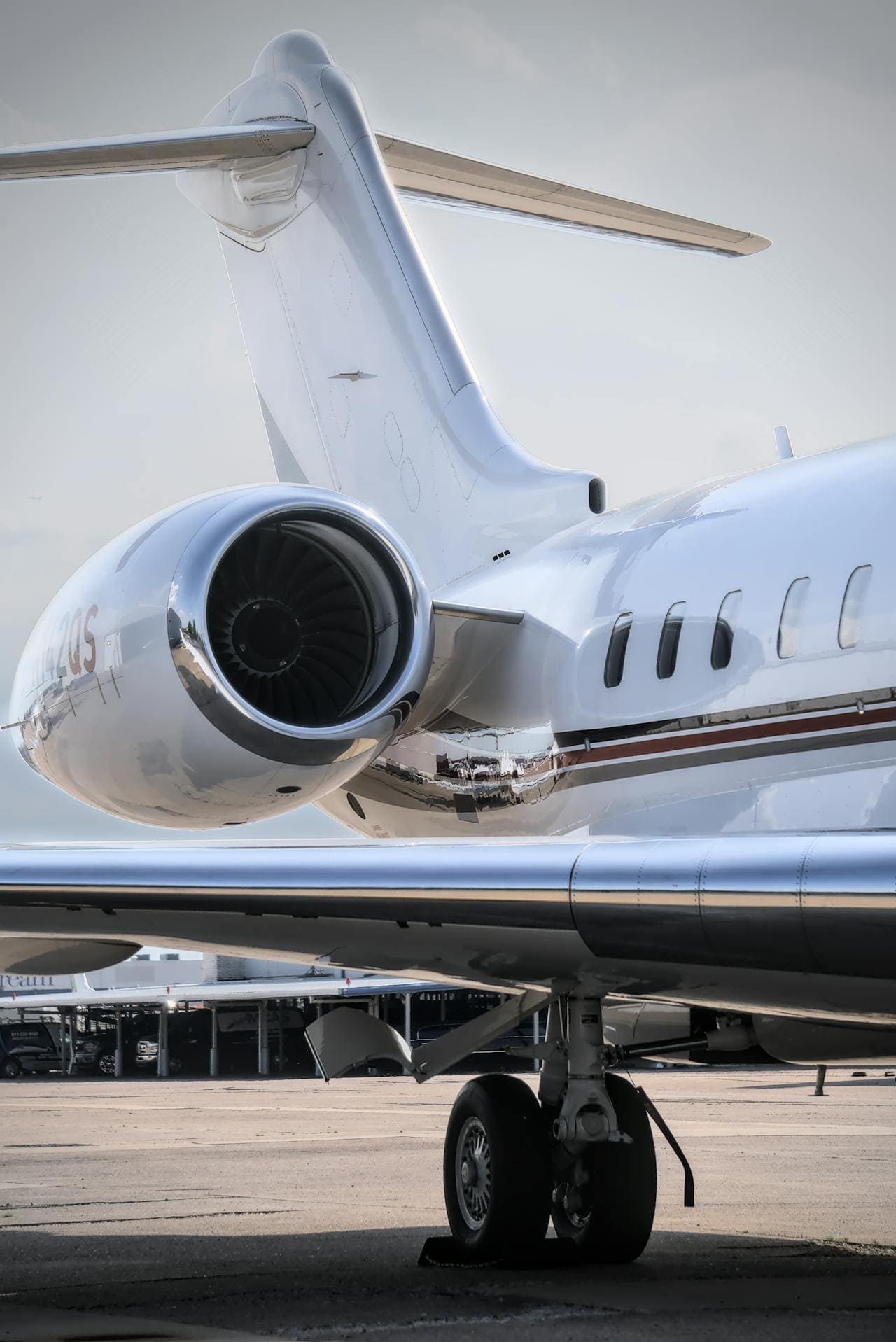
Booking a chauffeur service in Germany looks straightforward until you notice that the country has its own rules about what a chauffeur even is, that most of its cities restrict which vehicles may enter them, and that its business calendar is organised around trade fairs that fill entire regions at a stroke.
None of that is difficult. All of it is worth understanding before you book, because it explains why quotes, availability and journey times behave the way they do here.
SilverDrive works across Germany from an Amsterdam base, on the corridor that runs Düsseldorf, Cologne and Frankfurt and outward to Berlin, Stuttgart, Munich and Hamburg. The commercial terms are the same as everywhere else we operate: one price, agreed at booking, unaffected by traffic.
Mietwagen Or Taxi: The Distinction That Shapes Everything
German passenger transport law draws a hard line between two things that look similar from the pavement.
A Taxi is licensed to a specific operating area. It can be hailed or taken from a rank, it must generally accept a fare within its area, and it charges a regulated tariff on a meter. The price is set by the municipality, not by the driver or the customer.
A Mietwagen mit Fahrer, literally a hire car with driver, is what a chauffeur service actually is under German law. It must be booked in advance through the operator’s place of business, it may not be hailed on the street or wait at a taxi rank, and its price is agreed rather than metered. There is also a return-to-base obligation: after completing a job, the vehicle returns to the operator’s premises unless a new booking has been received while it is still out.
Two practical consequences follow.
First, a fixed price quoted at booking is the normal, legal way this works, not a marketing gimmick. If a German chauffeur company quotes you a firm figure, that is the model functioning as intended.
Second, you cannot flag one down. A chauffeur car parked outside a hotel is on a booking. Walking up to it and offering to pay is asking the driver to break the rules of their licence.
Drivers carrying passengers commercially hold a Personenbeförderungsschein, a passenger transport licence beyond the ordinary driving licence, involving a medical check and a clean record. It is the German counterpart of the driver credentials required in the Netherlands, which we cover in our guide to becoming a chauffeur.
Environmental Zones
Most sizeable German cities operate an Umweltzone, a low-emission zone that requires a green Umweltplakette displayed on the windscreen. The zones typically cover the central districts: in Berlin, everything inside the S-Bahn ring; in Stuttgart, effectively the whole city.
Enforcement is real and the fines are routine. Some cities, Stuttgart among them, have gone further at various points with additional restrictions on older diesel vehicles.
For a booked chauffeur, this is invisible. Compliance is a condition of operating, and the fleet is compliant. It becomes a live problem only in the self-drive rental scenario, where the badge, the boundary and the parking regime are all yours to solve on a morning when you have a meeting.
The Autobahn, Realistically
The reputation is famous and slightly misleading. Substantial stretches of the German motorway network carry no general speed limit, and there is an advisory speed of 130 km/h. But a great deal of the network is signed, through roadworks, urban approaches, accident-prone sections and areas with noise restrictions, and the Rhine-Ruhr corridor in particular carries enough freight traffic to make the theoretical maximum irrelevant.
What this means for planning: a chauffeur estimates German journeys on realistic averages, not on best-case numbers. A driver quoting you three hours for Frankfurt to Berlin is either not planning to stop or not planning to arrive.
Germany also has no general road toll for cars, which simplifies cross-border pricing compared with France, Austria or Switzerland.
The Trade-Fair Calendar
Germany’s Messe system concentrates business travel into specific weeks in specific cities, and those weeks behave differently from the rest of the year.
| City | Notable fairs |
|---|---|
| Düsseldorf | drupa, MEDICA, K, boot |
| Cologne | Anuga, imm cologne, gamescom, Photokina heritage events |
| Frankfurt | Automechanika, Frankfurt Book Fair, Ambiente, IAA events |
| Munich | bauma, EXPO REAL, Oktoberfest (not a fair, same effect) |
| Berlin | ITB, IFA, Grüne Woche |
| Hanover | HANNOVER MESSE, Agritechnica |
| Stuttgart | fairs at Messe Stuttgart, beside the airport |
In a fair week, hotel prices multiply, availability collapses across the whole region rather than just the city, and traffic around the fairground becomes its own weather system. Vehicles are committed months in advance.
The practical advice is unglamorous: book early, and book the whole week rather than day by day. Our guides to Düsseldorf, Cologne, Frankfurt, Stuttgart and Berlin cover each city’s own version of this.
Driving Between German Cities
Germany’s business centres are far enough apart to justify flying and close enough together to make driving competitive, particularly for two or more travellers, and particularly when the alternative is a short flight with two airport transfers bolted to it.
| Route | Approximate drive |
|---|---|
| Düsseldorf to Cologne | ~45 min |
| Cologne to Frankfurt | ~2 hours |
| Frankfurt to Stuttgart | ~2 hours |
| Stuttgart to Munich | ~2 hours 15 |
| Berlin to Hamburg | ~3 hours |
| Amsterdam to Düsseldorf | ~2 hours 30 |
| Amsterdam to Frankfurt | ~5 hours |
| Amsterdam to Berlin | ~6 hours 30 |
The crossover point is roughly where the flight is under 90 minutes: below that, the road usually wins door to door once you count check-in, security and two transfers. The full argument is in city-to-city chauffeur travel, and the mechanics of longer runs in long-distance car service.
A single booking covering several cities also means one price, one invoice and one driver who already knows the schedule, rather than three local operators discovering your itinerary on the morning it happens.
Airports And Arrivals
German airports are efficient and, mostly, well-connected to their cities: Frankfurt exceptionally so, Düsseldorf and Stuttgart notably close in, Berlin and Munich rather less so.
The arrivals arrangement is the same across all of them: the inbound flight is tracked, the driver meets you inside the arrivals hall rather than at a kerb, and a delayed aircraft moves the pickup rather than generating a waiting charge. Private aviation arrivals are met at the general aviation terminal, subject to the handler’s procedures.
Our airport guides for Frankfurt, Düsseldorf, Munich and Berlin Brandenburg cover terminals, timings and meeting points in detail.
What To Ask A German Operator
Four questions separate operators quickly.
- Is the price fixed at booking, and what would change it? The legitimate answers are: a change you make, or waiting time beyond an agreed allowance. Traffic is not an answer.
- Do you own the vehicles and employ the drivers, or are you brokering? Both models exist. Only one of them can tell you in advance who is turning up.
- How is flight tracking handled? If the answer involves you calling to update them, it is not flight tracking.
- How does invoicing work for a corporate account? German trade-fair weeks generate a lot of journeys; they should generate one invoice.
The wider version of this checklist is in our guide to choosing a car service company.
Frequently Asked Questions
What is the difference between a taxi and a chauffeur in Germany?
German law separates the two. A Taxi is licensed for a specific operating area, may be hailed, and charges a regulated meter tariff. A chauffeur car, legally a Mietwagen mit Fahrer, a hire car with driver, must be booked in advance through the operator and is priced by agreement rather than by meter, which is why a fixed price quoted at booking is normal.
Do I need an environmental badge to drive in German cities?
Most major German cities operate an Umweltzone, and vehicles entering need a green Umweltplakette on the windscreen. Professional fleets comply as a matter of course; the badge only becomes your problem if you rent and drive yourself.
Is there really no speed limit on the autobahn?
Large sections have no general limit, but a great deal of the network is signed, and roadworks, weather and traffic density mean the unrestricted stretches are shorter than the reputation suggests. There is also an advisory speed of 130 km/h. In practice, a chauffeur plans German journeys on realistic averages, not on the theoretical maximum.
Can one booking cover several German cities?
Yes. Germany’s motorway network and the distances between its business centres make multi-city road itineraries genuinely practical, and we quote them as a single fixed price covering tolls and driving time rather than as separate journeys.
Which German cities do you cover?
Our regular German work centres on Düsseldorf, Cologne, Frankfurt, Stuttgart, Berlin, Munich and Hamburg, along with the airport and trade-fair traffic that connects them and the corridor west to Amsterdam.
The Short Version
Germany’s chauffeur market is shaped by three things: a legal distinction that makes pre-booking and fixed prices the norm, environmental zones that quietly exclude non-compliant vehicles from every city centre worth visiting, and a trade-fair calendar that commits an entire region’s capacity months ahead. Book early for fair weeks, put multi-city legs on one booking, and let the operator carry the compliance. Send us the itinerary and we will quote the whole trip as one figure.
More from the Journal
Chauffeur Service in Haarlem: The Quiet Side of Amsterdam
Chauffeur service in Haarlem: Schiphol transfers, the North Sea beaches at Zandvoort, bulb-field season and a medieval centre cars cannot enter.
How to Become a Chauffeur: Licences, Skills and Getting Hired
How to become a chauffeur or private driver: the Dutch taxi driver card explained, licensing across Europe, what operators actually screen for, and the real job.

Wedding Transportation: Moving the Guests, Not Just the Couple
A practical wedding transportation guide: shuttle loops, vehicle mix, timings that hold, late-night returns and the contingencies that save the evening.