
Chauffeur Service in Berlin: A City That Punishes Bad Routing
A chauffeur service in Berlin for BER transfers, the government quarter and Messe weeks. Distances, the Umweltzone, and why Berlin rewards a local driver.
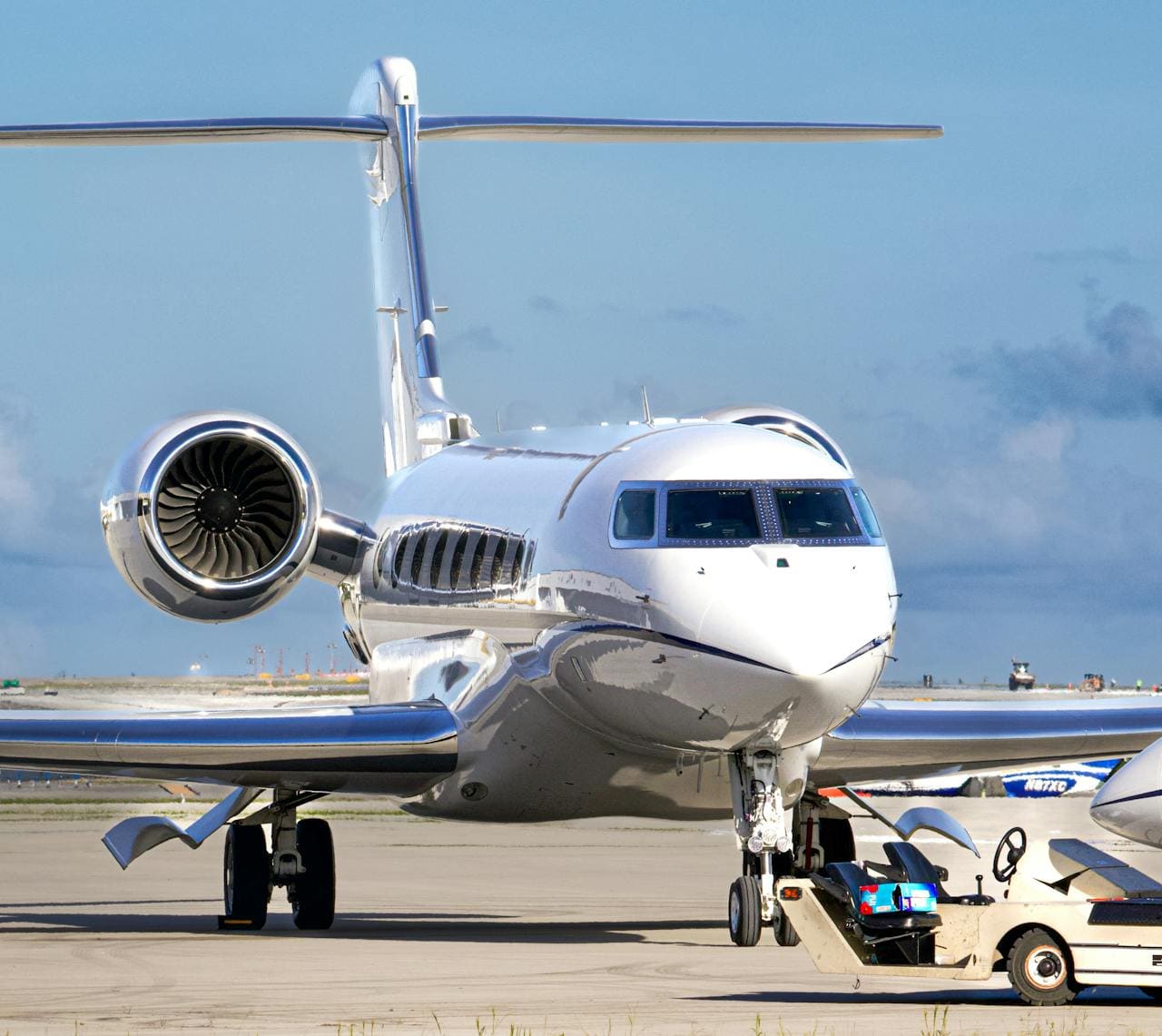
Chauffeur service in Berlin is a different proposition from chauffeur service in Frankfurt or Zurich, and the reason is simple: Berlin is enormous. The city covers close to 900 square kilometres, its business, political and cultural centres are not in the same place, and a schedule that would be trivial in a compact city becomes a routing problem here.
That is the case for a driver in Berlin, and it is also the case for a driver who actually knows the city rather than one following a phone.
SilverDrive operates in Berlin as part of our European work, on the same terms we apply everywhere: one price agreed at booking, screened English-speaking drivers, and flight tracking included. This guide covers the geography, the airport, the weeks to book early, and where a car earns its keep.
Berlin Is Three Cities In A Trench Coat
Visitors think of Berlin as Mitte. Berlin does not think of itself that way.
Mitte holds the government quarter, the Bundestag, most embassies, the Brandenburg Gate and the largest concentration of hotels a business traveller will actually be booked into. This is the part that behaves like a European capital’s centre.
Charlottenburg and the west: Kurfürstendamm, the older commercial spine, a great deal of legal and corporate work, and Messe Berlin at the western edge. Getting there from Mitte is fifteen minutes off-peak and forty at the wrong moment.
The south and southeast: Adlershof’s technology park, Schönefeld and the airport, Potsdam beyond the city limits. These are proper journeys, not hops.
A day that touches all three is a real day of driving. This is where a car with a driver stops being a comfort and starts being the only way the schedule survives contact with reality.
BER: The Airport And The Drive
Berlin Brandenburg Airport opened in October 2020 and consolidated everything: Tegel closed within days, Schönefeld became BER’s Terminal 5. There is now one airport, roughly 24 kilometres southeast of the centre.
| From BER | Typical drive |
|---|---|
| Mitte / government quarter | 35 to 45 min |
| Potsdamer Platz | 35 to 45 min |
| Charlottenburg / Ku’damm | 45 to 60 min |
| Adlershof | 20 to 25 min |
| Potsdam | 45 to 55 min |
The A113 carries most of the traffic into town and is generally the fast route, but “generally” does a lot of work in that sentence during commuting hours.
Arrivals are met inside the terminal at the arrivals hall, not at a kerbside rank. We monitor the inbound flight and the pickup follows the actual landing time: an hour of delay does not become an hour of waiting charges. For private aviation, arrivals through the general aviation terminal are met at the aircraft rather than routed through the main building, in the same way we handle FBO transfers elsewhere in Europe.
If you want the full picture of the airport itself, terminals and all, our BER airport guide covers it.
The Umweltzone, And Why It Is Not Your Problem
Berlin runs an Umweltzone, a low-emission zone covering everything inside the S-Bahn ring. Vehicles need a green environmental badge on the windscreen to enter. Driving in without one is an offence, and the ring encloses essentially every destination a visitor cares about.
For a professional operator this is a non-issue: the fleet complies as a condition of doing business. It matters if you were weighing a self-drive rental, where the sticker, the ring boundary and the parking regime become three separate things to think about on a working morning.
Berlin also enforces parking seriously in the central districts, and hotel forecourts on Unter den Linden are not the free-for-all they look like. A driver who drops you and circles is worth more here than in most cities.
The Weeks That Fill The City
Berlin’s calendar concentrates demand into a handful of weeks, and they are worth knowing before you assume a car will be available on three days’ notice.
- Grüne Woche, January, one of the largest food and agriculture fairs in the world, and it fills Messe Berlin at the western edge.
- Berlinale, February, the film festival takes over Potsdamer Platz and the surrounding hotels entirely.
- ITB Berlin, spring, the travel trade’s own fair, which means every hotel in the city is hosting people who book hotels for a living.
- IFA, early September, consumer electronics, and again centred on Messe Berlin.
During these weeks the useful advice is not about traffic. It is that capacity is committed weeks out, and a same-week request in Berlin during IFA is a genuinely different conversation from the same request in October.
Political And Diplomatic Work
Berlin is a government city, and government work has its own requirements: unmarked vehicles, drivers who understand security perimeters and do not improvise around them, discretion about who was collected from where, and the ability to hold a position for an unpredictable length of time without becoming a problem for anyone’s protection detail.
This overlaps closely with the work we do in The Hague, and the expectations are the same. A VIP chauffeur service in this context is not about the badge on the car: it is about a driver who has done it before, does not photograph the passenger, and knows that the answer to a question about a previous client is always the same answer.
Berlin By Road From Amsterdam
Berlin is around 660 kilometres from Amsterdam: roughly six and a half hours of driving before stops, on a route that is close to entirely motorway via the A1 and A2 through Osnabrück and Hannover.
Flying is faster on paper. Door to door with check-in, security, the flight, and two airport transfers, the gap narrows to something much less decisive, and the road version gives you a car at both ends and a workable rear seat in between. For two or more travellers, the economics tip further. Our guide to city-to-city chauffeur travel sets out where the crossover sits.
The same corridor works in reverse for German clients travelling west, and connects onward to Hamburg, Hannover and Leipzig on a single fixed-price booking.
Hourly Hire Versus Transfers
For a straight airport run, a fixed-price transfer is the right instrument. For a day in Berlin, it usually is not.
The city’s distances mean a schedule of four appointments generates a great deal of dead running, and booking four separate transfers means paying for four separate positioning runs and hoping each car arrives. Hourly hire keeps one car and one driver with you, the price fixed in advance, and the coat and laptop bag stay in the vehicle between stops.
It also absorbs the thing Berlin does most reliably, which is run late.
Frequently Asked Questions
How long is the transfer from BER Airport to central Berlin?
Berlin Brandenburg sits about 24 kilometres southeast of the centre. Mitte is typically 35 to 45 minutes by road, Charlottenburg closer to an hour at the wrong time of day. Berlin is geographically large, so “into the city” means very different journeys depending on which part.
Do I need a special sticker to drive into Berlin?
Berlin operates an Umweltzone, a low-emission zone covering the area inside the S-Bahn ring, and vehicles need a green environmental badge to enter it. Any professional operator’s fleet will already comply; it matters mainly if you were considering a self-drive rental.
Can you drive between Amsterdam and Berlin?
Yes. It is roughly 660 kilometres, around six and a half hours of driving before stops, on a route that is almost entirely motorway. For two or more travellers with luggage, or anyone who wants the journey as working time, it competes with flying once airport time is counted.
Which weeks are hardest to book in Berlin?
The Berlinale in February, ITB in the spring, IFA in early September and Grüne Woche in January all fill the city. During those weeks central hotels, restaurants and cars are all committed early, and traffic around Messe Berlin and Potsdamer Platz thickens considerably.
Is a chauffeur worth it in a city with good public transport?
For a single point-to-point trip within Mitte, often not. For a day of appointments spread between Mitte, Charlottenburg, Adlershof and Potsdam, almost always: Berlin’s distances are long enough that changing lines repeatedly costs more time than the car does.
The Short Version
Berlin is a capital city with a metropolitan area’s geography. The airport is a proper drive from the centre, the centre is a proper drive from the west, and the weeks that matter are booked out early. Take the car by the hour when the day has more than two stops in it, and let someone who knows the Umweltzone boundary worry about the Umweltzone boundary. Tell us the schedule and we will quote it as one fixed price.
More from the Journal
Chauffeur Service in Haarlem: The Quiet Side of Amsterdam
Chauffeur service in Haarlem: Schiphol transfers, the North Sea beaches at Zandvoort, bulb-field season and a medieval centre cars cannot enter.
How to Become a Chauffeur: Licences, Skills and Getting Hired
How to become a chauffeur or private driver: the Dutch taxi driver card explained, licensing across Europe, what operators actually screen for, and the real job.

Wedding Transportation: Moving the Guests, Not Just the Couple
A practical wedding transportation guide: shuttle loops, vehicle mix, timings that hold, late-night returns and the contingencies that save the evening.