
The Setra S 515 HDH: The Coach Behind Serious Group Travel
What the Setra S 515 HDH is, why tour and executive operators run it, and what to check before chartering one. Specs, layouts and honest alternatives.
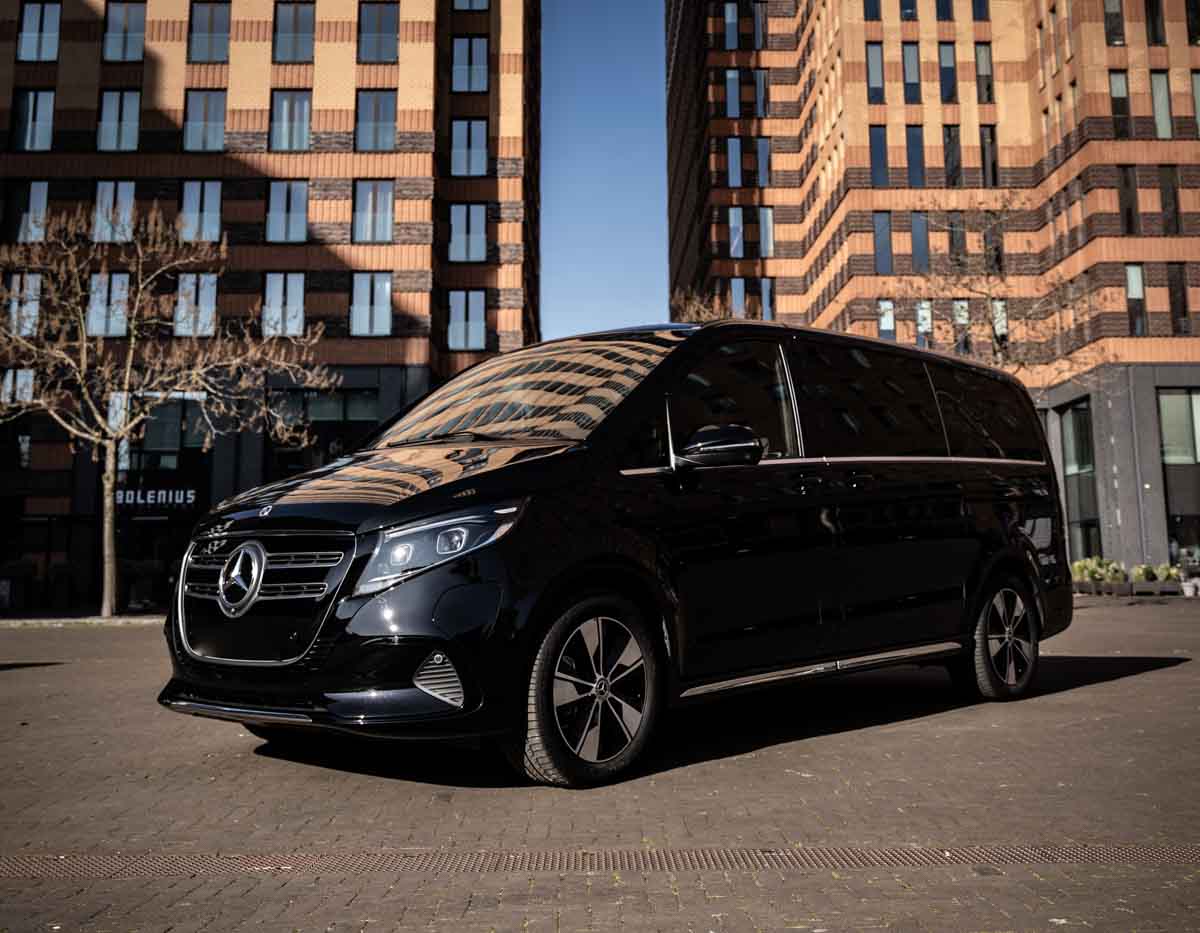
Most people who search for the Setra S 515 HDH by name already know what they are looking at. It is the coach that turns up when a group is large, the journey is long, and somebody has decided that a standard tour bus will not do: touring artists, sports teams, corporate delegations and high-end tour operators all end up on the same short list.
This is a plain explanation of what the model is, why it keeps appearing in that role, and what actually matters when you charter one.
What The Model Is
Setra is a German coach manufacturer and part of Daimler Buses. Its TopClass range is the flagship line, the Setra TopClass was named Coach of the Year 2026, sitting above the ComfortClass in materials, refinement and specification.
Within TopClass, the HDH designation denotes the high-deck models with the raised roofline. The range spans roughly 12.5 to 14.2 metres across its variants, and the S 515 HDH is the shortest of them, at just under 12.5 metres on three axles.
That last point is the whole reason the model exists. Everything else in the class is longer; the S 515 HDH trades a little capacity for the ability to get places.
Specification, Briefly
| Class | Setra TopClass 500, HDH (high deck) |
| Length | ~12.5 m (12,495 mm), three axles |
| Turning circle | under 20 metres |
| Engine | Mercedes-Benz OM 471 inline six-cylinder diesel |
| Output | 350 kW (476 hp) standard, 375 kW (510 hp) optional |
| Notable options | TopSky panoramic glass roof, galley, VIP conversions |
The turning circle is the specification that matters most in practice, and it is the one nobody mentions in marketing copy. Under twenty metres for a coach of this length is what allows the vehicle into hotel forecourts, historic city approaches and venue service roads that longer coaches simply cannot enter.
Why Operators Choose It
It goes where the others cannot. European touring means old cities with streets laid out before coaches existed. A 14-metre coach is excluded from a great many useful places; a manoeuvrable 12.5-metre one is not.
The luggage capacity is real. High-deck construction puts substantial space underfloor. For a touring party with equipment, instruments, kit bags, exhibition materials, this is often the binding constraint, and it is why groups end up in a full coach rather than two minibuses.
It is refined enough for the front of house. TopClass interiors are built to a standard where a corporate group or a client delegation can be transported in it without anyone apologising. That is not true of every coach.
Support across Europe. Being part of the Daimler Buses network means service and parts are available across the continent, which matters on a multi-country tour far more than it does on a day trip.
Seating: Ask, Do Not Assume
This is where charter quotes go wrong most often.
In standard touring trim, the S 515 HDH seats up to around fifty passengers. That is the number the model is usually quoted at.
VIP and executive conversions carry far fewer, sometimes around half, because the interior volume has gone somewhere else: tables, facing lounge seating, a galley, a rear saloon, sometimes bunks on tour-specification vehicles. Two coaches of the same model can therefore be entirely different products.
So the question to ask an operator is never “how many does an S 515 HDH seat”. It is “how many does this vehicle seat, and what is the layout?” Ask for photographs of the actual coach, not the manufacturer’s brochure.
What To Check Before You Charter
The specific vehicle and its age. A model name is not a vehicle. Ask which registration is being allocated and what year it is.
The layout, in photographs. As above.
Toilet and galley. Present on many but not all. It changes the stop schedule on a long run considerably.
Driver hours. European drivers’ hours rules govern how long a driver may work and when breaks must be taken. A long itinerary may legally require a second driver, and that is a cost that should appear in the quote rather than in a conversation on day two. An operator who has not raised it has not planned the itinerary.
Licence and insurance. Coach operation is a regulated activity with its own permits. Ask, and expect a straight answer.
Access at every stop. The real constraint. Where does the coach park at the hotel? Can it reach the venue entrance, or is there a drop-off point four hundred metres away? Is there overnight parking, and is it secure? Historic centres, in particular, frequently prohibit coach access altogether.
Do You Actually Need A Coach?
Frequently, no. The honest thresholds:
| Group size | Usually the right answer |
|---|---|
| Up to 7 | V-Class: better access, lower cost, no access restrictions |
| 8 to 16 | Minibus or two V-Class vehicles |
| 16 to 30 | Midi-coach or full coach depending on luggage |
| 30+ | Full coach |
Two further considerations override the numbers.
Luggage and equipment push the threshold down. A group of sixteen with staging equipment needs the underfloor space regardless of seat count.
Unity of movement pushes it down too. If the group must arrive together, at one time, at one door, a delegation, a wedding party, a team, then one vehicle is the requirement even if two would technically carry them.
Working in the other direction: access restrictions push the threshold up. If the destinations are inside a historic centre with no coach access, splitting into smaller vehicles is not a compromise, it is the only plan that works.
How Coach Work Fits Alongside Chauffeur Work
Most groups that need a coach also need cars. The principals arrive separately, the advance team goes ahead, and somebody has to be at the venue before the coach does.
That combination is normal and worth booking as one arrangement rather than two: one point of contact, one schedule that accounts for both, and one invoice. The alternative, a coach company and a car company who have never spoken, produces exactly the coordination failures you would expect.
Our event transportation guide covers how the two layers are planned together, and wedding transportation covers the version of the same problem where the guests are the group.
Frequently Asked Questions
What is a Setra S 515 HDH?
It is a high-deck touring coach from Setra’s TopClass range, the flagship line of the German manufacturer that forms part of Daimler Buses. The S 515 HDH is the shortest of the TopClass HDH models at around twelve metres, which makes it the most manoeuvrable of them while keeping the raised roofline and luggage capacity of the class.
How many passengers does an S 515 HDH seat?
In standard touring trim, up to around fifty seats. VIP and executive conversions carry far fewer, sometimes half that, because the space goes to tables, lounge seating, a galley or a rear saloon instead. Always ask for the specific vehicle’s layout rather than the model’s maximum.
Why do tour and team operators choose this model?
Manoeuvrability with capacity. A turning circle under twenty metres lets a full-size coach work in old European city centres and tight venue approaches that longer models cannot reach, while the high deck keeps substantial underfloor luggage space for equipment and cases.
What should I check before chartering a coach?
The specific vehicle and its age, the seating layout, whether a toilet and galley are fitted, driver hours for the itinerary, the operator’s licence and insurance, and access at every pickup and drop-off point. Coach access is the constraint that ruins otherwise sound plans.
Do I need a coach, or would smaller vehicles do?
Up to seven passengers, a V-Class is almost always better. Between eight and sixteen, a minibus usually wins on access and cost. A full coach earns its place from roughly twenty passengers upward, or when the group must genuinely travel as one unit.
The Short Version
The Setra S 515 HDH is the manoeuvrable member of a flagship coach range: about 12.5 metres, a turning circle under twenty, high-deck luggage capacity, and interiors that range from around fifty touring seats to a heavily converted VIP saloon. If you are chartering one, the model name tells you almost nothing: ask for the vehicle, the layout and the access plan. And check first whether the group actually needs a coach at all. Tell us the group and the itinerary and we will tell you honestly what it needs.
More from the Journal
Chauffeur Service in Haarlem: The Quiet Side of Amsterdam
Chauffeur service in Haarlem: Schiphol transfers, the North Sea beaches at Zandvoort, bulb-field season and a medieval centre cars cannot enter.
How to Become a Chauffeur: Licences, Skills and Getting Hired
How to become a chauffeur or private driver: the Dutch taxi driver card explained, licensing across Europe, what operators actually screen for, and the real job.

Wedding Transportation: Moving the Guests, Not Just the Couple
A practical wedding transportation guide: shuttle loops, vehicle mix, timings that hold, late-night returns and the contingencies that save the evening.