
Ground Transport in Phoenix: A European Traveller's Guide
Sky Harbor sits minutes from downtown, but the Valley is vast and the heat is a transport factor. How to move around Phoenix and Scottsdale, and what to book.
Phoenix breaks the American rule that the airport is far away. Sky Harbor sits a few kilometres from downtown, close enough that the transfer is a footnote. Then the city breaks the opposite rule: everything else is much further apart than it looks, and for four months of the year the heat makes the gap between a car park and a front door a genuine consideration.
SilverDrive operates in Europe, not Arizona. What follows is the briefing we would want before our own first trip to the Valley of the Sun, because the questions European travellers ask us about Phoenix are the ones we answer daily about Schiphol.
One Airport, Two Terminals
Phoenix Sky Harbor International (PHX) handles essentially all commercial traffic for the metro, which spares you the O’Hare and Midway problem of picking the wrong airport entirely.
It runs Terminal 3 and Terminal 4. Terminal 4 is much the larger of the two and handles the majority of departures; Terminal 3 takes the rest. There is no Terminal 2 any more, and no Terminal 1, which surprises people who find a stale reference online. Confirm your terminal from the airline rather than from memory.
The PHX Sky Train is the piece worth knowing about. It is a free automated people mover linking the terminals, the Rental Car Center and the 44th Street station on the Valley Metro Rail line. It runs on its own elevated alignment, so it is immune to the road traffic below, and it is how you move between terminals without a shuttle bus.
For arrivals, the practical consequence is that a European traveller landing at PHX is close to downtown but potentially a long way from where they are actually staying. That distinction drives every other decision in this guide.
The Valley Is Much Bigger Than It Looks
“Phoenix” in conversation usually means the metropolitan area, which locals call the Valley of the Sun: Phoenix, Scottsdale, Tempe, Mesa, Chandler, Glendale and more, spread across a very large, very flat basin on a grid.
Low density is the defining feature. Blocks are long, buildings sit behind car parks, and two destinations that look adjacent on a map can be twenty or thirty minutes apart. Nothing about the scale is intuitive if your reference points are Amsterdam or Zurich.
Valley Metro Rail runs light rail through downtown Phoenix, Tempe and into Mesa, and it is genuinely useful along that corridor. It is a line, not a network: it does not serve Scottsdale, and it does not reach most of the resort and golf destinations that bring leisure visitors to Arizona in the first place.
The freeway system carries everything else. I-10 and I-17 cross the metro, and the Loop 101 and Loop 202 ring roads handle the orbital traffic. Peak periods behave like any large American metro: mornings inbound, late afternoons outbound, with the afternoon the longer and less forgiving half.
The honest summary: downtown Phoenix and Tempe are navigable without a car. Everywhere else is not.
Heat Is a Transport Factor
This is the part European visitors reliably underestimate, and it deserves to be stated plainly rather than buried in a weather note.
From June through September, daytime temperatures in Phoenix regularly exceed 40C and frequently go higher. That changes ground transport in specific, practical ways. A five minute walk from a distant car park stops being trivial. Waiting on an exposed kerb for a ride that is eight minutes away becomes genuinely unpleasant, and for elderly travellers or anyone with a cardiac or respiratory condition it is a real risk rather than a discomfort. A dark car left standing takes time to become habitable.
The planning response is simple: minimise the outdoor segment. Being collected from a building entrance at an agreed time is worth considerably more in July in Phoenix than the same service is worth in most European cities in any month. This is the same argument as winter in Chicago, running in the opposite direction.
Anything scheduled outdoors in summer clusters into early morning and evening, and traffic follows the same pattern. Plan around the heat and you will incidentally plan around the traffic.
Robotaxis Are Real Here
Phoenix is where driverless cars stopped being a demonstration. Waymo has run fully driverless public passenger service across large parts of the metro for years, and Phoenix was the first place in the world where an ordinary member of the public could summon a car with nobody in the front seat.
For a visitor this is worth knowing for two reasons. First, it is a genuine novelty and the flat grid and predictable weather that made Phoenix the natural testbed also make it a pleasant place to try one. Second, and less romantically, coverage areas and airport access change over time, and a service that covers your hotel may not cover your dinner reservation. Check the current map rather than assuming.
What a robotaxi does not do is wait for a delayed flight, load four cases, or guarantee a vehicle at 04:45 for a departure that cannot be missed. It is a good tool for a discretionary trip across town and a poor one for a schedule with consequences.
The same distinction applies to ride hail, which works normally in Phoenix and prices normally too: fine at 10:00, expensive during a major event or a summer afternoon when demand spikes.
Scottsdale and the Resort Corridor
Most leisure visitors to Arizona are not really going to Phoenix. They are going to Scottsdale, or to a resort or golf property somewhere in the northeast of the Valley.
Scottsdale is a substantial drive from Sky Harbor, has no light rail connection, and is comprehensively car dependent. Resort properties are frequently set well back from any main road. If your itinerary involves golf courses, spa resorts or the Scottsdale restaurant scene, you will be making several trips a day across meaningful distances, and the choice is between hiring a car and booking a driver.
Booking a driver wins more often than people expect, for reasons that have nothing to do with luxury. The trips are short but numerous, parking at resorts and restaurants is a recurring friction, and the evening trips frequently involve wine. A driver at your disposal for a day removes all three at once, which is the case we make in hiring a chauffeur by the hour.
Arizona’s event calendar also matters here. The Valley hosts major golf, motorsport, auction and baseball spring training events concentrated in the cooler months from January to March, and during those weeks hotel prices, traffic and car availability all move together. Book ground transport early for those dates or accept what is left.
Vetting a Chauffeur Service in Phoenix
If you decide to book a car, the tests are the same ones we apply to our own work, and they translate directly. A chauffeur service Phoenix search will return a map pack of local operators, a couple of international platforms and several brokers, and they are not the same product.
- Do you own the vehicle, or are you subcontracting? Both can be fine. You should know whose standards apply and who answers the phone at 05:00.
- Is the price fixed door to door? Get the total in writing, including what triggers a surcharge. Waiting time and flight delays are where quotes quietly diverge.
- Do you track the flight number? Not the scheduled time. A transatlantic arrival into PHX will frequently not land when the timetable says, and flight tracking is the difference between a car waiting and a car gone.
- Do you actually cover my destination? Central Phoenix, Scottsdale and the far East Valley are very different runs. Confirm the destination is priced, not just possible.
A Phoenix chauffeur service worth booking answers all four crisply and in writing. Those four questions come from our guide to executive car service, and they separate an operator from a reseller in any market. The broader version, including how the local map pack ranking actually works, is in choosing a car service near you.
Start With the Leg We Drive
We cannot send you a car in Arizona, and we would rather say so than pretend our coverage is wider than it is.
What we can do is make sure the journey starts properly. Phoenix is a long way from Europe and most routings involve a connection, which means the first leg is the one where a missed slot cascades into a rebooked day and a lost night. SilverDrive covers that leg from Amsterdam and across the Netherlands and Europe: our own car, our own chauffeur, a fixed price agreed before the car moves, and a pickup tracked to your flight.
Plan the Valley around the distances and the heat. Book the Schiphol leg and stop planning that one.
More from the Journal
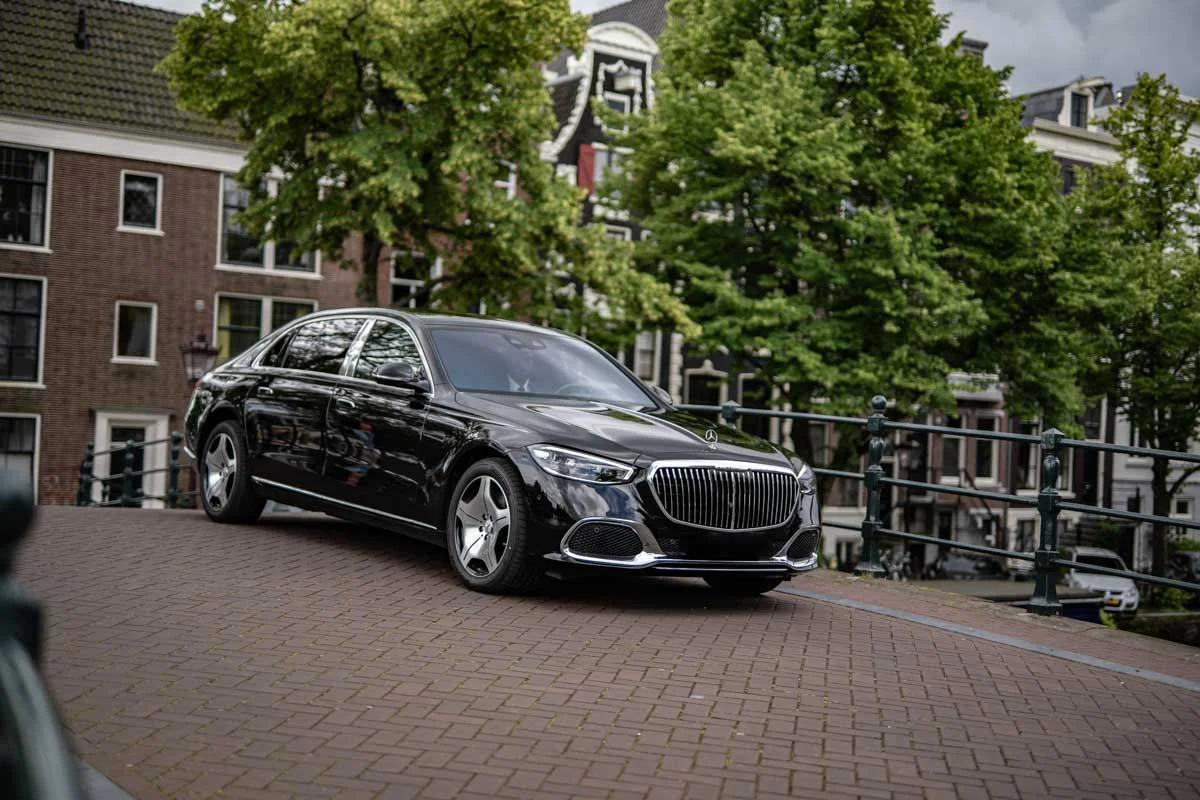
Chauffeur Service in Haarlem: The Quiet Side of Amsterdam
Chauffeur service in Haarlem: Schiphol transfers, the North Sea beaches at Zandvoort, bulb-field season and a medieval centre cars cannot enter.
How to Become a Chauffeur: Licences, Skills and Getting Hired
How to become a chauffeur or private driver: the Dutch taxi driver card explained, licensing across Europe, what operators actually screen for, and the real job.

Wedding Transportation: Moving the Guests, Not Just the Couple
A practical wedding transportation guide: shuttle loops, vehicle mix, timings that hold, late-night returns and the contingencies that save the evening.