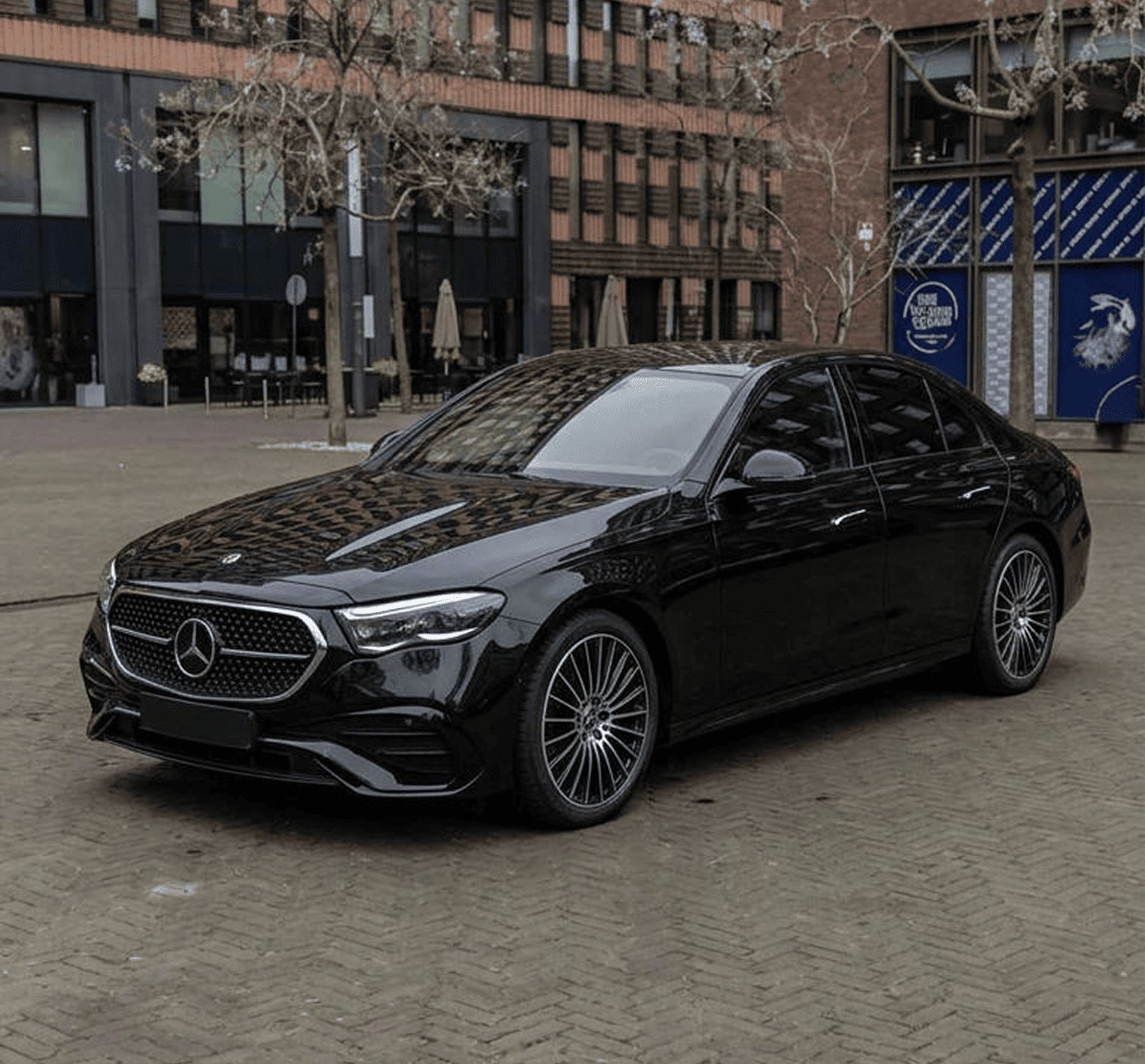
Mercedes E-Class Chauffeur Service
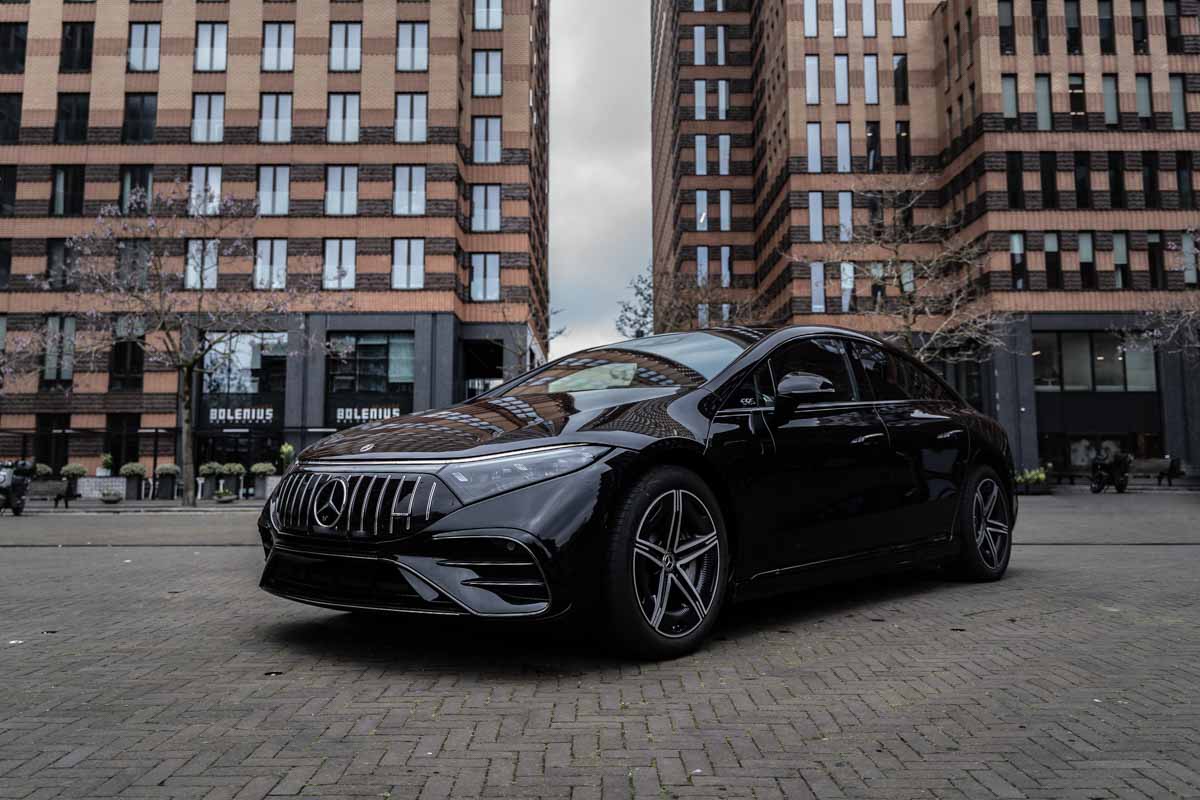
The Mercedes E-Class is SilverDrive's executive sedan: the car most business travellers book.

2

2


A diplomatic chauffeur service provides vetted, security-trained drivers and a discreet premium fleet for embassies, permanent missions, government delegations and state visits. In the Netherlands that means protocol awareness, confidentiality, careful route planning and close coordination with state security. SilverDrive supports this work across the country and into Europe, with fixed prices agreed before travel and English-speaking chauffeurs available around the clock.
Diplomatic transportation is not ordinary airport-transfer work with nicer cars. It sits inside a wider operation built around protocol, timing and security. The passenger might be an ambassador, a visiting minister, an advance team arriving days ahead of a principal, or the household and office staff who keep a delegation running. Each has different needs, and a serious service reads the difference rather than treating everyone the same.
In practice, the work spans arrivals and departures at the airport, movements between an embassy or hotel and a meeting venue, multi-vehicle convoys for larger delegations, and the quieter logistics that rarely reach any published itinerary. The common thread is discretion. A good chauffeur notices everything and repeats none of it.
The Netherlands carries an unusual amount of diplomatic weight for its size. The Hague is home to the International Court of Justice, the International Criminal Court, Europol and the OPCW, alongside more than 150 embassies and international organisations. Amsterdam and the Zuidas district form the country’s business capital, and Schiphol is the main international gateway for nearly everyone arriving on official travel.
That concentration shapes the transport work. In a single week the same city can host court proceedings, permanent-mission business, consular appointments and inbound state visits. Embassies and permanent missions in The Hague run steady, recurring transport for their staff and visitors, while heads of state and VIP delegations pass through for shorter, more intensive programmes. A chauffeur service operating here has to be comfortable with both rhythms.
High-security transportation starts with the person behind the wheel. SilverDrive runs a security driver service with chauffeurs trained in protective driving, route planning and the kind of discretion that high-profile clients depend on. Every chauffeur is security-screened and English-speaking, and drives a vehicle the company owns and maintains itself rather than a sub-contracted one.
It is worth being precise about vetting, because this is a topic where overstatement does real damage. Formal security clearance for close protection of a protected principal is issued and controlled by the state, not by a private company. What a private diplomatic chauffeur service can offer is screened, trained, reliable drivers who plan routes carefully, hold confidences and slot into a security plan run by others. That distinction matters, and it is the honest one.
Personal protection of a head of state or monarch is the responsibility of that country’s security services and the host nation’s protocol staff. SilverDrive does not replace them and does not claim to. Our role is to support the wider operation: delegations, advance parties, family members, household and office staff, and the business or cultural itineraries that surround the headline event. On that work a private service coordinates with the protection team rather than substituting for it, taking direction on timing, routing and access.
State visits and VIP delegations run on protocol. Vehicle order in a convoy, who is met first, where cars stage and how a motorcade holds together through a city all follow rules that protocol officers set. A chauffeur’s job is to understand those rules well enough to execute them without friction, then hold position and timing under pressure.
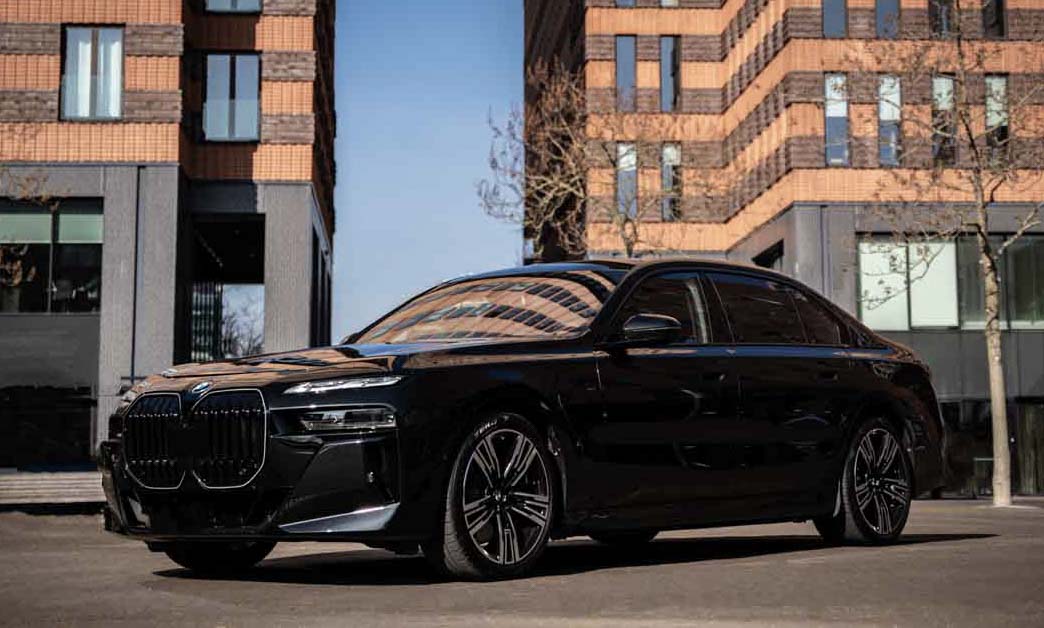
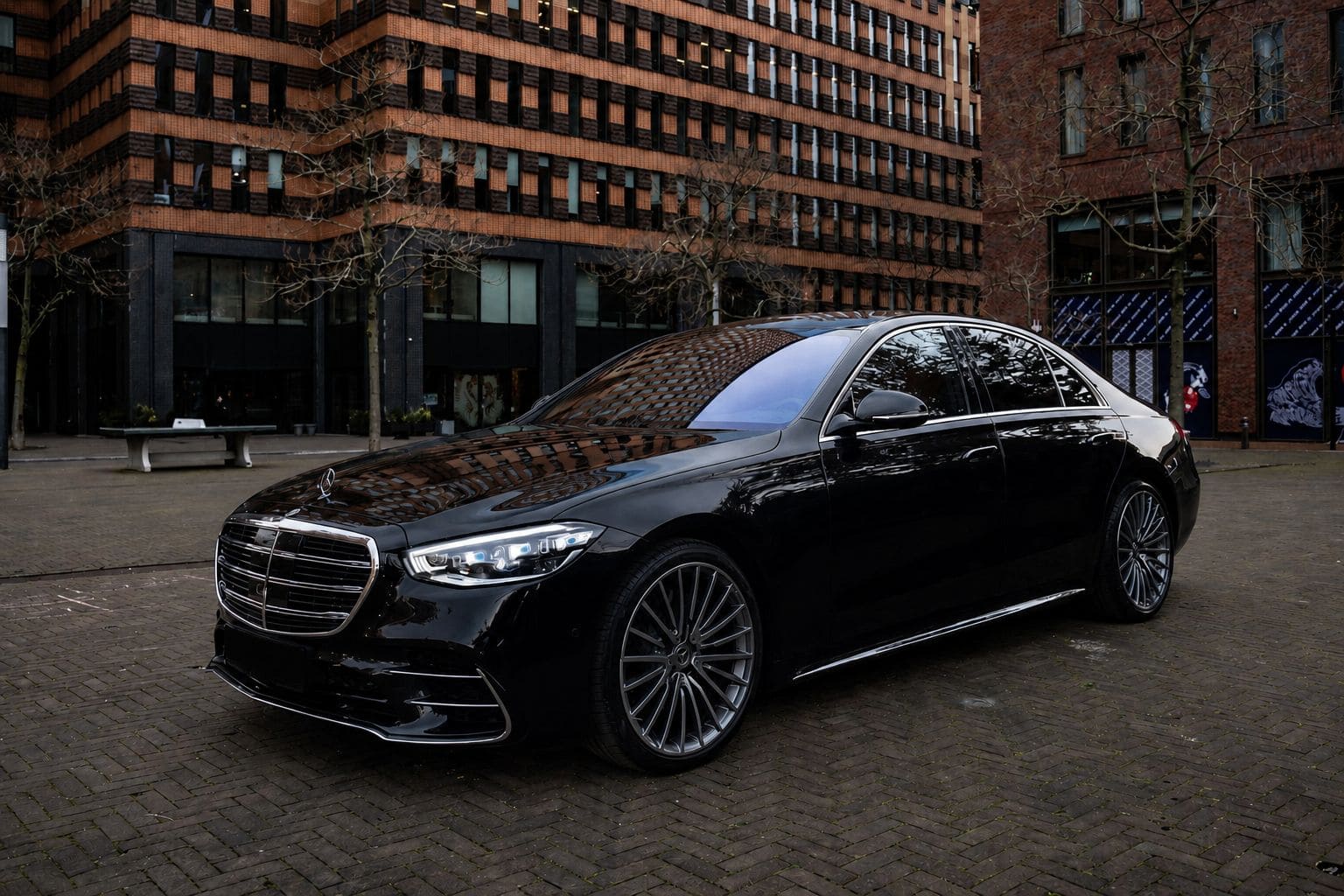
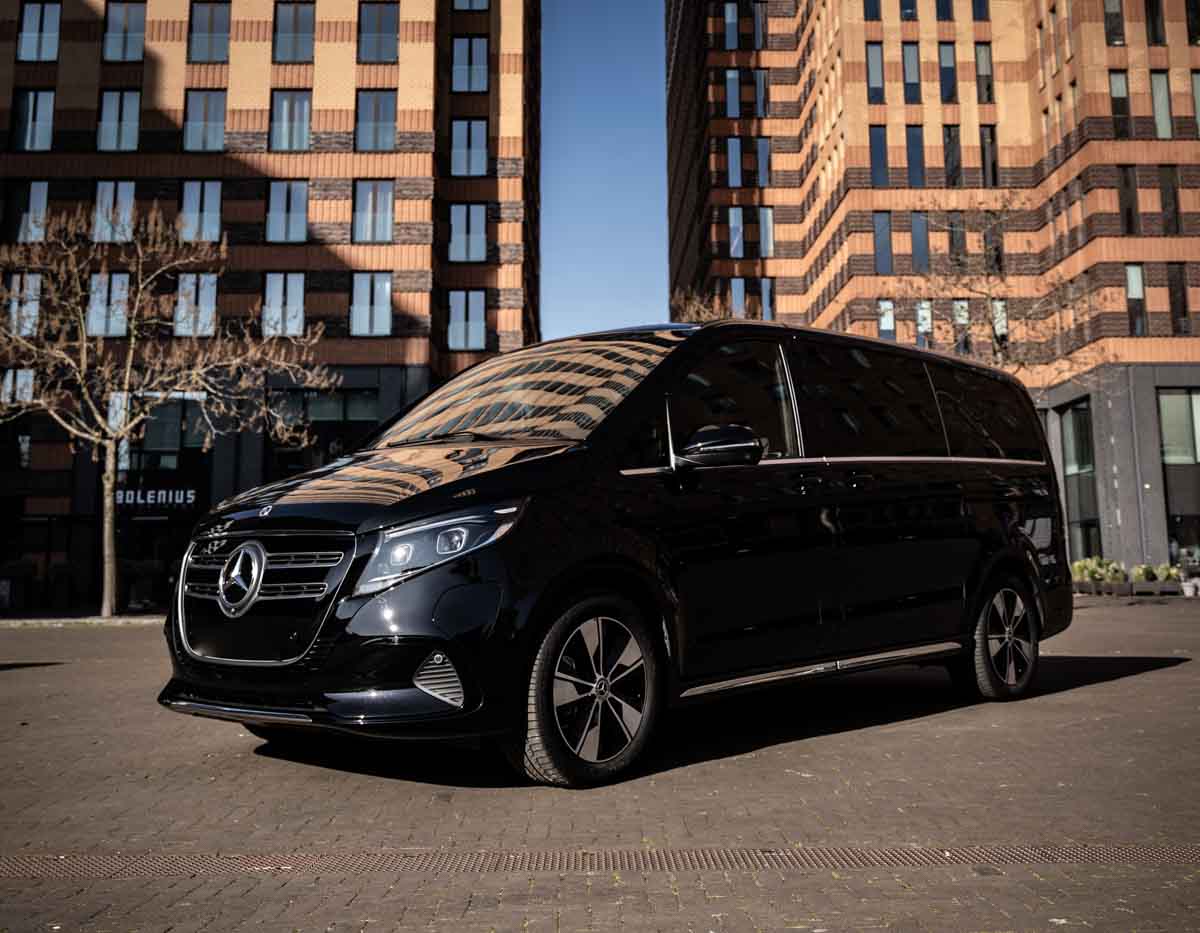
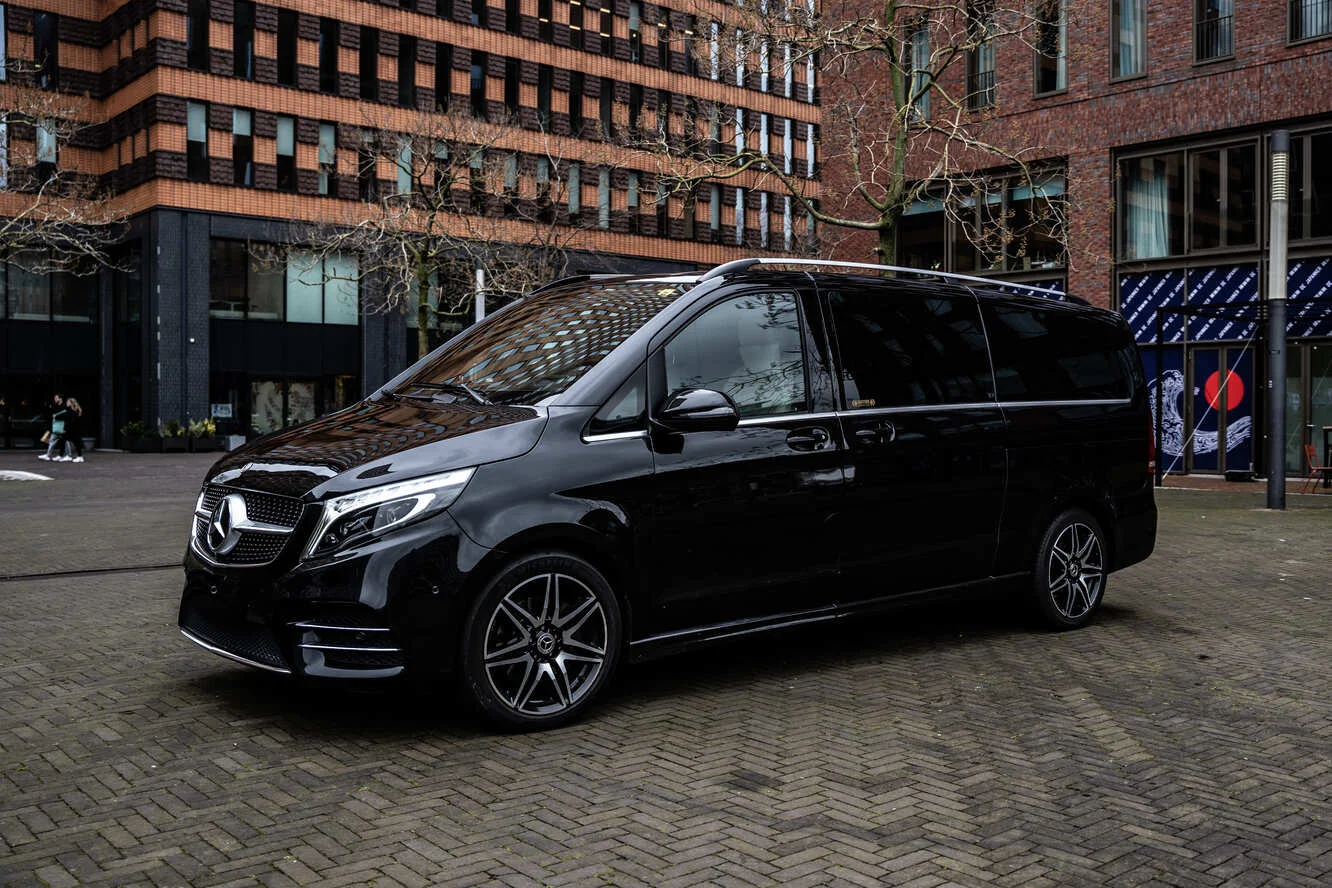
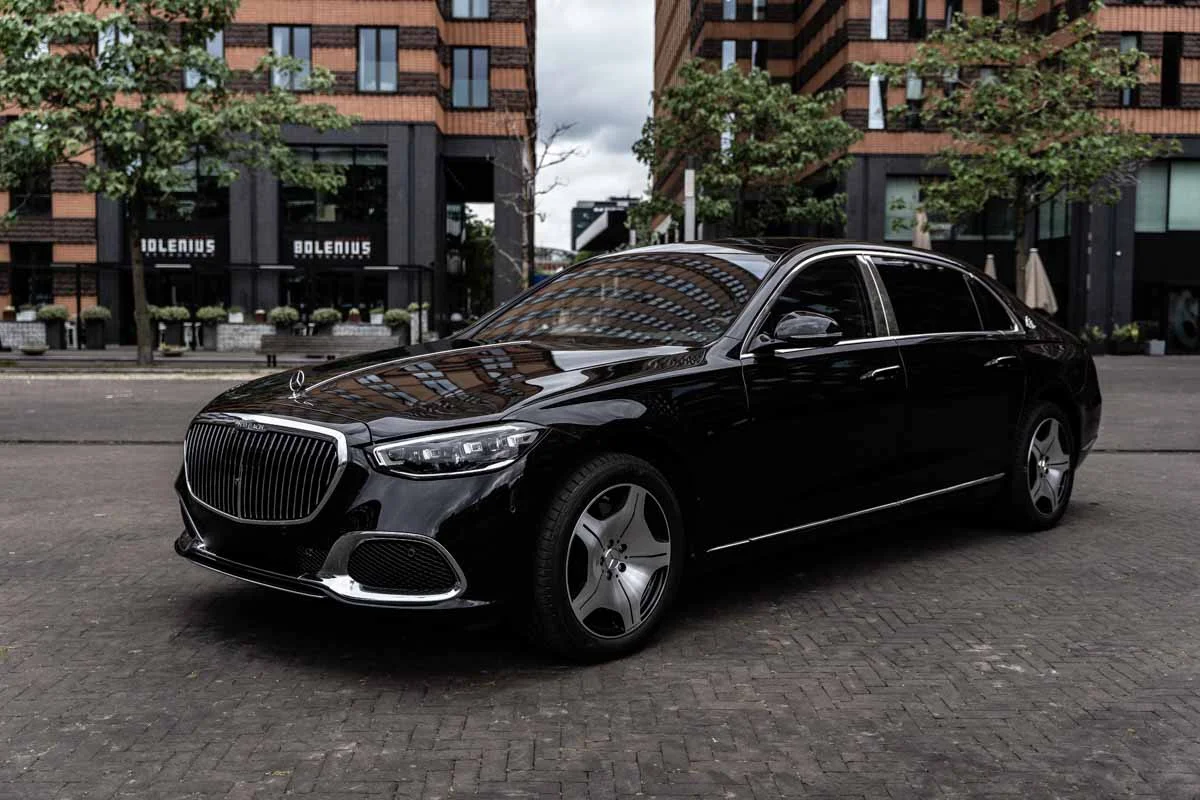
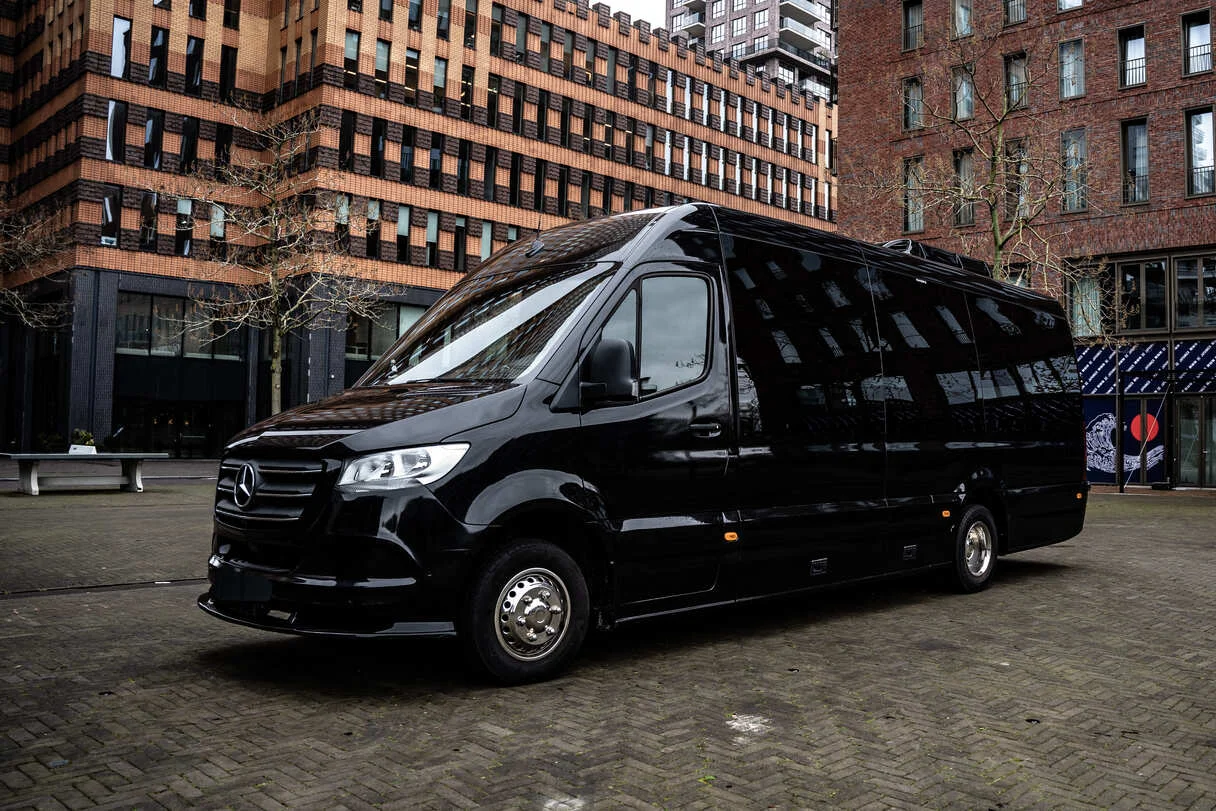
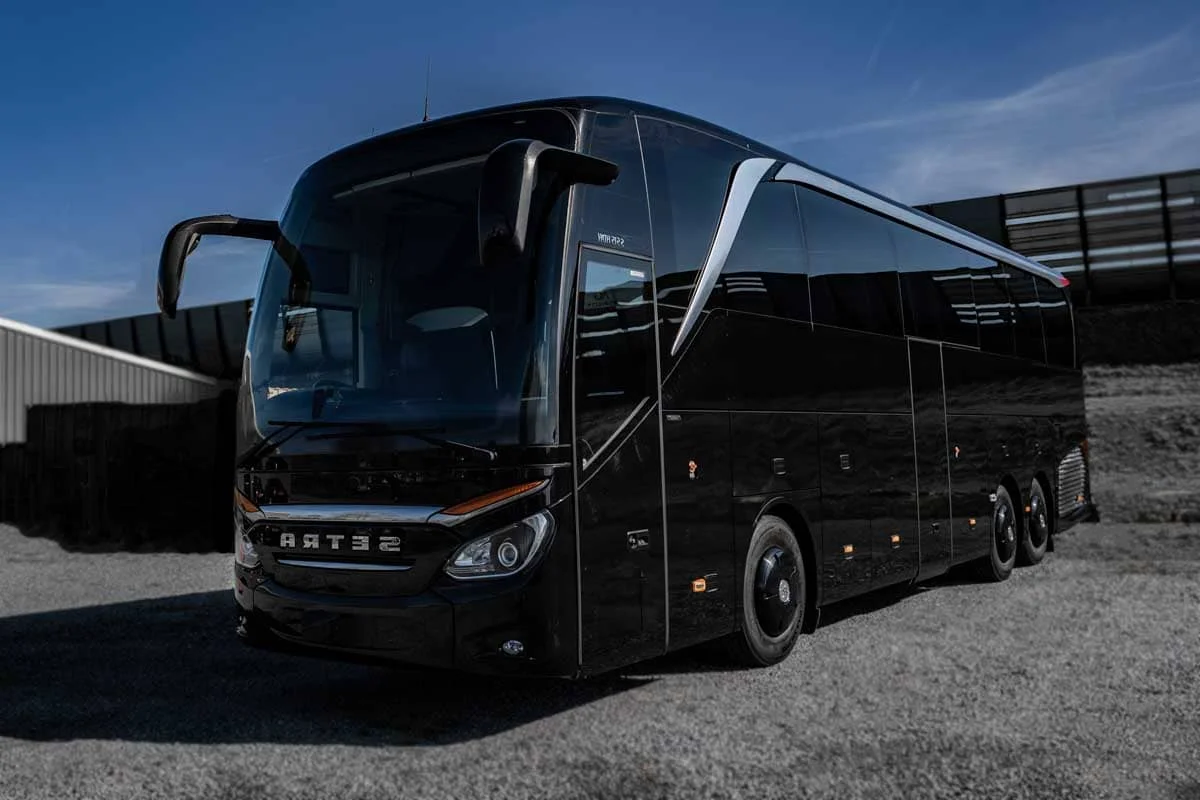
Larger delegations add a logistics problem on top of the protocol one. Moving a group of government delegates in the right cars, in the right sequence, arriving together and on time, takes planning that begins long before anyone gets in a vehicle. SilverDrive’s fleet is built for this range: Mercedes E-Class, S-Class and Mercedes-Maybach S-Class sedans, the fully electric BMW i7 and Mercedes EQS, the Mercedes V-Class and electric EQV for groups up to seven, the Sprinter for up to sixteen, and a Setra coach for up to fifty-six. A single delegation can move in one coordinated set of vehicles rather than a patchwork.
For principal and senior-delegate travel, the vehicle reads as much as it carries. The Mercedes-Maybach S-Class sits at the top of the range for quiet, private travel, with the S-Class and electric options close behind for anyone whose programme calls for a lower-emission arrival. Because every car is owned and driven by SilverDrive chauffeurs, presentation and condition stay consistent, the sort of detail that goes unremarked when it is right and very much noticed when it is not.
Most official travel into the country arrives through Schiphol, and the sensitive arrivals use the airport’s private terminal. The Schiphol VIP Centre, sometimes called the Royal Lounge or VIP Services, offers private check-in, private security, escort to the aircraft and, where cleared, vehicle access onto the apron. Access is by reservation through Schiphol VIP Services, and a chauffeur can deliver a passenger to the VIP entrance and, where permitted, drive onto the apron to meet the aircraft directly.
SilverDrive regularly operates transfers to and from the Schiphol VIP Centre and the Jet Aviation private-jet terminal, the FBO used by private and government aircraft. Our guide to the Schiphol VIP Centre covers how that side of an arrival works in more detail. Real-time flight tracking keeps the car matched to the actual landing time rather than the scheduled one, which is what saves a delegation from waiting on the apron or a chauffeur from waiting airside.
This overview is the starting point. Different visitors carry different requirements, so the cluster continues with three guides written for particular audiences.
Alongside diplomatic work, the same standards carry into corporate transportation for business delegations and into broader VIP vervoer for clients who need discretion without a diplomatic remit.
The diplomatic service is the branch of a government that manages its relations with other states, through embassies, consulates and permanent missions to international organisations. Its staff represent their country abroad, handle official communication and support their nationals. Ground transport for that community is a practical, everyday part of how the work gets done.
A diplomatic agent is an accredited official, such as an ambassador or embassy staff member, who represents their home country in a host state. The role covers negotiation, reporting, consular support and official representation. Diplomatic agents travel frequently between missions, meetings and the airport, which is where a reliable chauffeur service becomes part of the routine.
A diplomatic chauffeur service provides vetted, security-trained drivers and a discreet premium fleet for embassies, missions, government delegations and state visits. It handles airport transfers, movements between venues and convoy logistics, with an emphasis on confidentiality and protocol. It supports a delegation’s wider transport needs and coordinates with any state security team on the ground.
Chauffeurs are security-screened and trained in protective driving, route planning and discretion. Formal state security clearance for close protection of a protected principal is issued by government, not a private company, so it stays with state security. A private service provides vetted, trained drivers who work inside a security plan led by others.
Embassies and permanent missions in The Hague run recurring transport for staff, visiting officials and delegations, plus airport transfers through Schiphol. Because The Hague hosts more than 150 embassies and organisations including the ICJ, ICC, Europol and the OPCW, the work is steady and varied. Fixed prices agreed in advance and around-the-clock availability suit that pattern.
Chauffeurs follow the precedence and timing rules set by protocol officers: vehicle order in a convoy, staging points, who is met first and how a motorcade holds together. For sensitive arrivals they coordinate with the Schiphol VIP Centre and state security, take direction on routing, and keep to timings that the protocol team, not the driver, controls.