
Corporate Car Service and Business Chauffeur Hire: A Buyer's Guide
How corporate transport services work for the person who books: account setup, corporate chauffeurs, fixed pricing, multi-vehicle days and clean billing.
A corporate car service is ground transport bought on an account rather than ride by ride: agreed vehicles, screened corporate chauffeurs, prices fixed at booking and one consolidated invoice for finance. The passenger judges the car; the service itself is built, or broken, at the desk of the person who books it.
That person is usually an executive assistant, an office manager or a travel manager, and this guide is written for them rather than for the passenger. It covers what a proper account looks like, what separates a corporate chauffeur from a driver, how business chauffeur hire works by the hour and by the day, how to hold a multi-vehicle day together, and the questions that separate a genuine corporate transportation partner from a taxi firm with a nicer website. The right provider makes you look organised without you thinking about it. The wrong one generates a low hum of chasing, re-confirming and explaining receipts to finance.
What a Corporate Car Service Account Should Actually Give You
Strip away the branding and a business car service account is worth having only if it removes work from your week. Concretely, that means:
- One booking channel that always answers. Not a different dispatcher each time. When you send a schedule, someone accountable confirms it, and the same someone handles changes.
- Fixed prices confirmed at booking. You should be able to tell your executive what the journey costs before it happens. SilverDrive agrees every price at booking: no surge pricing, no meter, no waiting-time ambush on the invoice.
- Confirmations you can forward. A clean confirmation with pickup time, vehicle and chauffeur details is something you paste straight into the executive’s calendar. If you have to rewrite the provider’s emails to make them presentable, that is your time being spent on their process.
- Consolidated invoicing. One invoice, journeys listed against your references, so finance allocates costs without asking you what “ride, Tuesday, €X” was.
- Passengers who never touch payment. The person in the back seat should be able to get in, get out and say thank you. Everything else happens between you and the operator.
None of this is exotic. It is simply the difference between a provider organised around accounts and one organised around individual rides.
Corporate Chauffeurs: What Separates Them from Drivers
A business car service is only ever as good as the chauffeurs it puts behind the wheel, which makes the chauffeur the first thing worth interrogating and the last thing most buyers ask about. Corporate chauffeurs are hired for judgement as much as for driving: knowing when to talk and when to leave a passenger to their call notes, where to wait outside a building that does not allow waiting, how long the last leg to the terminal really takes on a wet Tuesday at 07:20.
Four things to check before you commit an account:
- Screening and continuity. Ask whether chauffeurs are screened, and whether the same one can cover a repeat route. A passenger met by the same person every Thursday stops briefing from scratch every Thursday.
- English, and local ground knowledge. Corporate work is international by definition. A chauffeur who speaks English and already knows which entrance a given office actually uses saves your executive the two calls you would otherwise field.
- Discretion as a working habit. Confidential conversations happen in the back of the car. That should be treated as unremarkable: no comment, no repetition, no curiosity.
- The small mechanics. The name board spelled correctly, the door, the luggage, the temperature the passenger asked for last time. These are the details a passenger notices only when they are missing.
For clarity on what a chauffeur is not: SilverDrive provides driving and ground logistics only, never close protection, armoured vehicles or self drive rental.
Setting Up the Account: What to Sort Out Once
An hour spent at setup saves you a call before every booking. Agree these once and write them down:
Passenger profiles. Names as they should appear on name boards, mobile numbers, language notes, preferences (temperature, quiet car, preferred water). A good operator stores these so you stop repeating them.
Vehicle defaults. Decide which vehicle class fits which situation. A Mercedes-Benz E-Class covers most day-to-day corporate work and is what business class chauffeur service looks like on an ordinary weekday; the S-Class is the sensible default for board members and important clients; a V-Class with seven seats handles small teams travelling together. If your company has sustainability reporting, note that electric options exist (SilverDrive runs the Mercedes EQS and EQV and the BMW i7 in its own fleet), and make electric your stated default where it fits the journey.
Billing references. Cost centres, project codes, whatever finance needs. Give them to the operator once so they appear on every invoice line automatically.
Escalation. Whom do you call at 06:40 when a flight has moved? A corporate provider should be reachable around the clock; SilverDrive operates 24/7 precisely because corporate travel does not keep office hours.
Which Arrangement Fits Which Journey
Most of the friction in corporate booking comes from buying the wrong shape of journey rather than the wrong vehicle. This is the shorthand worth keeping next to your account details:
| Situation | Usual arrangement | What to specify when you book |
|---|---|---|
| One executive, one airport pickup | Point to point transfer with flight tracking | Flight number, name board spelling, terminal |
| Visitor in town for three days | Business chauffeur hire by the day, same chauffeur throughout | Hotel, daily start time, likely finish |
| Delegation on several inbound flights | Multi-vehicle corporate transport services with one coordinator | Full manifest, passenger to vehicle allocation, contact on the day |
| Board member or major client | Executive saloon, usually an S-Class | Preferences, quiet car, meet and greet on arrival |
| VIP guest with a public profile | VIP and luxury car service, discreet pickup point | Where the car waits, who greets, who else travels |
| The same route every week | Standing booking on your B2B account | Route, times, billing reference |
How Do You Run a Multi-Vehicle Day Without It Unravelling?
The bookings that test a provider are not single transfers. They are the days when a delegation of twelve arrives on three flights, visits two offices and a restaurant, and departs from different terminals. This is the point at which corporate transport services stop being a car booking and start being logistics. Here is the structure that holds:
- Send the full picture, not fragments. One document with every movement, passenger names against vehicles, and the day’s contact person on your side. Piecemeal bookings create piecemeal errors.
- Ask who coordinates on the day. For multi-vehicle work you want one dispatcher or lead chauffeur watching the whole operation, not three drivers working from three separate confirmations. This is the same discipline that makes event transportation work at larger scale, and the same discipline that keeps an investor roadshow on schedule when the clock is tighter still.
- Build in slack where it is cheap. Fifteen minutes between a meeting’s scheduled end and the pickup costs little. A convoy waiting while you renegotiate three onward bookings costs your afternoon.
- Let flight tracking do the airport work. Every SilverDrive airport transfer includes free flight tracking, so a delayed inbound leg adjusts itself. If the arrival matters enough, consider adding a meet and greet inside the terminal: here is when that is worth booking.
- Confirm the manifest the afternoon before. One short exchange: names, times, vehicles, phone numbers. Then stop worrying about it.
Business Chauffeur Hire for Delegation Days and Multi-Day Visits
For visitors staying several days, book by the day rather than journey by journey. An hourly or daily arrangement gives your executive a car and chauffeur that stay with them, which absorbs the reality of corporate schedules: meetings overrun, dinners get added, plans move. Priced this way, chauffeur hire also stops being a series of small decisions you have to make on someone else’s behalf while they are in a meeting.
SilverDrive keeps the same chauffeur across multi-day bookings. By day two, the chauffeur knows the hotel, the offices, the visitor’s pace and their coffee stop. Your visitor stops checking their phone for pickup details because the car is simply there. For international programmes that continue beyond the Netherlands, the same principle extends across borders with private drivers throughout Europe, one chauffeur for the whole trip, not a relay of local contractors.
VIP Guests: When Luxury Transportation Is the Point
Most corporate journeys are working journeys, and the car should disappear into the day. Occasionally it should not. When the passenger is a chairman, a keynote speaker or the client whose visit the quarter depends on, a VIP car service is doing a different job: it is part of how your company introduces itself before anyone has said a word.
The differences are small and specific. The vehicle steps up from the everyday saloon to an S-Class. The arrival is handled inside the terminal rather than at a kerb. The chauffeur stays the same for the whole visit, so nobody is briefed twice. Nothing that happens in the car is discussed afterwards. Luxury transportation at this level is not really about the badge on the bonnet: it is about a guest who never once has to ask where the car is. If your organisation hosts guests who expect that as standard, a dedicated VIP chauffeur service is the same corporate account with the settings turned up, not a separate company to vet.
Billing Clarity: The Part Finance Will Judge You On
Ask any assistant what goes wrong with ground transport and the answer is rarely the driving. It is the paperwork. B2B chauffeur services live or die here, because the customer is a company rather than a passenger and the account has to behave like one. Three tests for a provider:
- Is the quoted price the invoiced price? With fixed pricing agreed at booking it must be. If a provider’s invoices routinely differ from quotes, every journey becomes a small reconciliation task for you. SilverDrive publishes its approach openly on the prices page.
- Can invoices carry your references? Cost centre, traveller name, date, route: on the invoice, not in your memory.
- What does a cancellation cost? Get the policy in writing at setup, not during your first cancelled board meeting.
If you book ground transport for clients rather than colleagues, the same tests apply with one extra layer of accountability on top: how travel agencies handle ground transport covers that case in detail.
Questions That Separate Providers in One Phone Call
- Do you operate your own fleet, or broker journeys to partners? (An own-fleet operator controls quality; a broker controls a spreadsheet. SilverDrive drives its own vehicles only.)
- Who exactly will drive? Are chauffeurs screened, and do they speak English?
- Is the price fixed at booking, in writing?
- Can the same chauffeur cover a multi-day visit?
- Is flight tracking included on airport pickups, or billed as an extra?
- Can several colleagues book against one account and still produce one invoice?
- Who answers the phone at 05:00?
A provider that answers all seven without hedging is a provider you can delegate to. Hedging on any of them tells you where your future problems will come from.
Book It Once, Then Trust It
The point of a corporate account is that ground transport stops being something you manage and becomes something that happens. If you are setting this up for your team, contact SilverDrive to agree the account details, or book a first journey and judge the confirmations, the chauffeur and the invoice for yourself. That first booking tells you most of what you need to know.
Frequently Asked Questions
What is the difference between a corporate car service and booking taxis ad hoc?
A corporate car service works from an account: agreed vehicles, screened chauffeurs, fixed prices confirmed at booking and one consolidated invoice. Ad hoc taxis give you variable pricing, unknown drivers and a stack of individual receipts to reconcile. For occasional single rides the difference is small. Across a year of visits, board days and airport runs, it is the difference between a system and a scramble.
What is a business class chauffeur service?
Business class chauffeur service describes the standard most companies book for everyday work: an executive saloon such as the Mercedes-Benz E-Class, a screened chauffeur who speaks English, a price fixed at booking and a confirmation clean enough to forward to the passenger. It is the working default rather than the ceremonial one. For board members and important clients most bookers step up to an S-Class, and for small teams travelling together to a V-Class with seven seats.
Can one person book on behalf of several executives?
Yes, and that is the normal arrangement. The assistant or travel manager holds the account, sends the schedule, and receives the confirmations and the invoice. Passengers never need to handle payment or paperwork in the car. Changes go through the booker, so there is one authoritative version of the day rather than several.
What do B2B chauffeur services actually mean in practice?
B2B chauffeur services are bought by a company rather than by the person in the back seat. The company holds the account, an assistant or travel manager does the booking, the chauffeur never discusses money, and finance settles one invoice against agreed references. The passenger experience is the same as any private car service; the commercial and administrative side sits entirely between the operator and the business.
How does billing work with SilverDrive corporate accounts?
Every journey is priced fixed at booking, so the figure on the invoice is the figure you were quoted: no surge pricing, no waiting-time surprises, no meter. Invoices can reference your cost centres or booking references so finance can allocate journeys without chasing you for context.
What happens if a flight is delayed on an airport pickup?
Flight tracking is included on every airport transfer, so the chauffeur follows the actual arrival time rather than the scheduled one. You do not need to monitor the flight or call anyone. If the flight lands early, the car is early; if it is delayed two hours, the pickup moves with it at the same fixed price.
Can we keep the same chauffeur for a multi-day visit?
Yes. On multi-day bookings SilverDrive retains the same chauffeur throughout, so your visitor is met by a familiar face each morning who already knows the hotel, the offices on the schedule and any preferences from day one. For senior visitors this continuity matters more than any single feature of the car.
Can you arrange VIP transport and luxury car service for a very senior guest?
Yes. For a VIP guest the usual shape is an S-Class, the same chauffeur for the whole stay, a name board with the name spelled as the guest expects it, and a meet and greet inside the terminal on arrival so nobody stands in an arrivals hall looking for a car. Luxury transportation at this level is judged less on the vehicle than on the absence of waiting, questions and paperwork. SilverDrive does not provide close protection, armoured vehicles or security escorts.
How much notice does a corporate booking need?
More notice always helps, particularly for multi-vehicle days, but the service runs 24/7 and short-notice requests are normal in corporate work. A realistic rule: book recurring transfers as soon as the travel is confirmed, and call about same-day changes rather than emailing. A delayed meeting is easier to absorb when the operator hears about it early.
More from the Journal
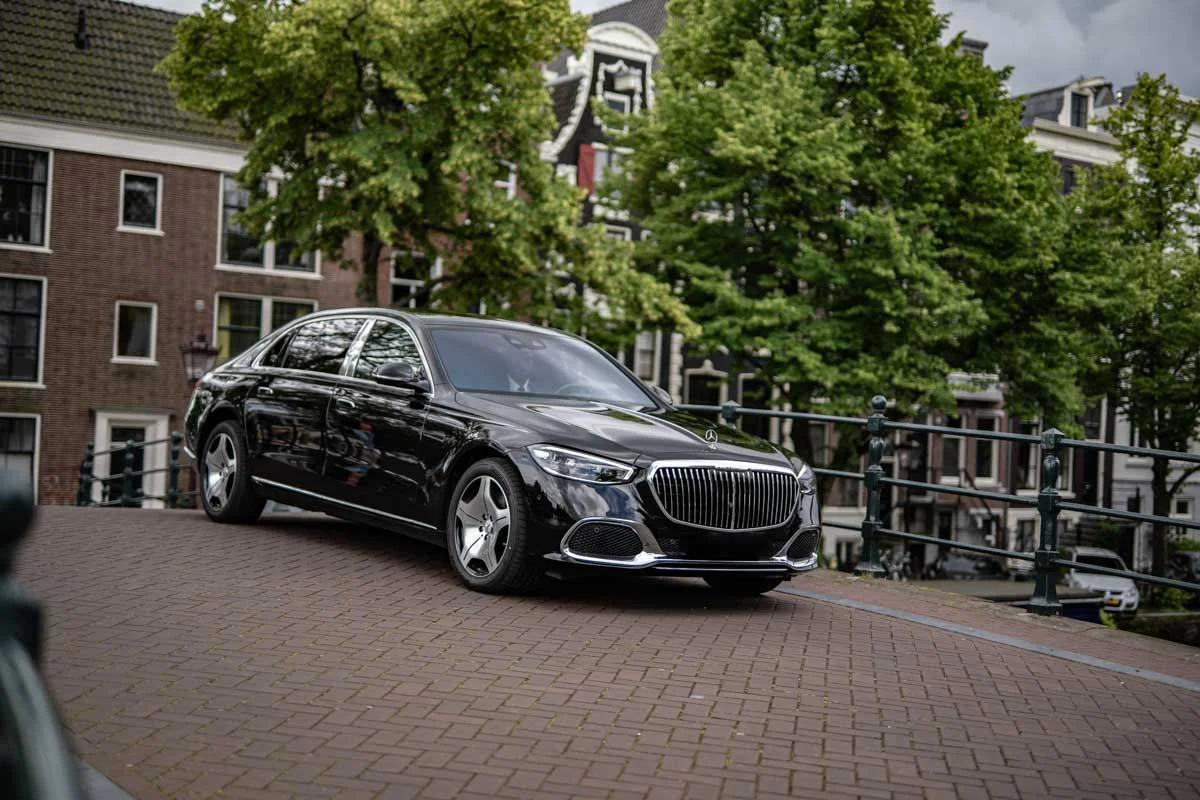
Chauffeur Service in Haarlem: The Quiet Side of Amsterdam
Chauffeur service in Haarlem: Schiphol transfers, the North Sea beaches at Zandvoort, bulb-field season and a medieval centre cars cannot enter.
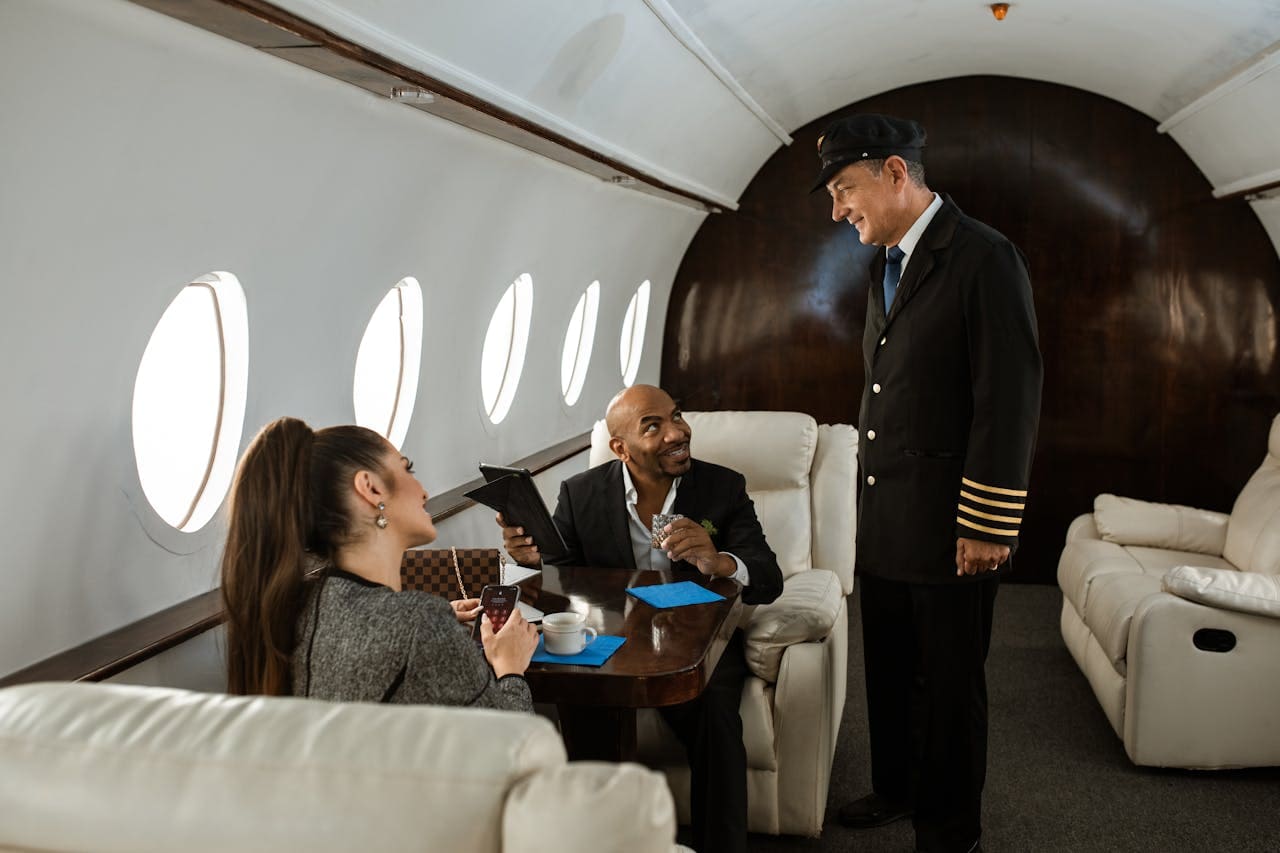
How to Become a Chauffeur: Licences, Skills and Getting Hired
How to become a chauffeur or private driver: the Dutch taxi driver card explained, licensing across Europe, what operators actually screen for, and the real job.

Wedding Transportation: Moving the Guests, Not Just the Couple
A practical wedding transportation guide: shuttle loops, vehicle mix, timings that hold, late-night returns and the contingencies that save the evening.